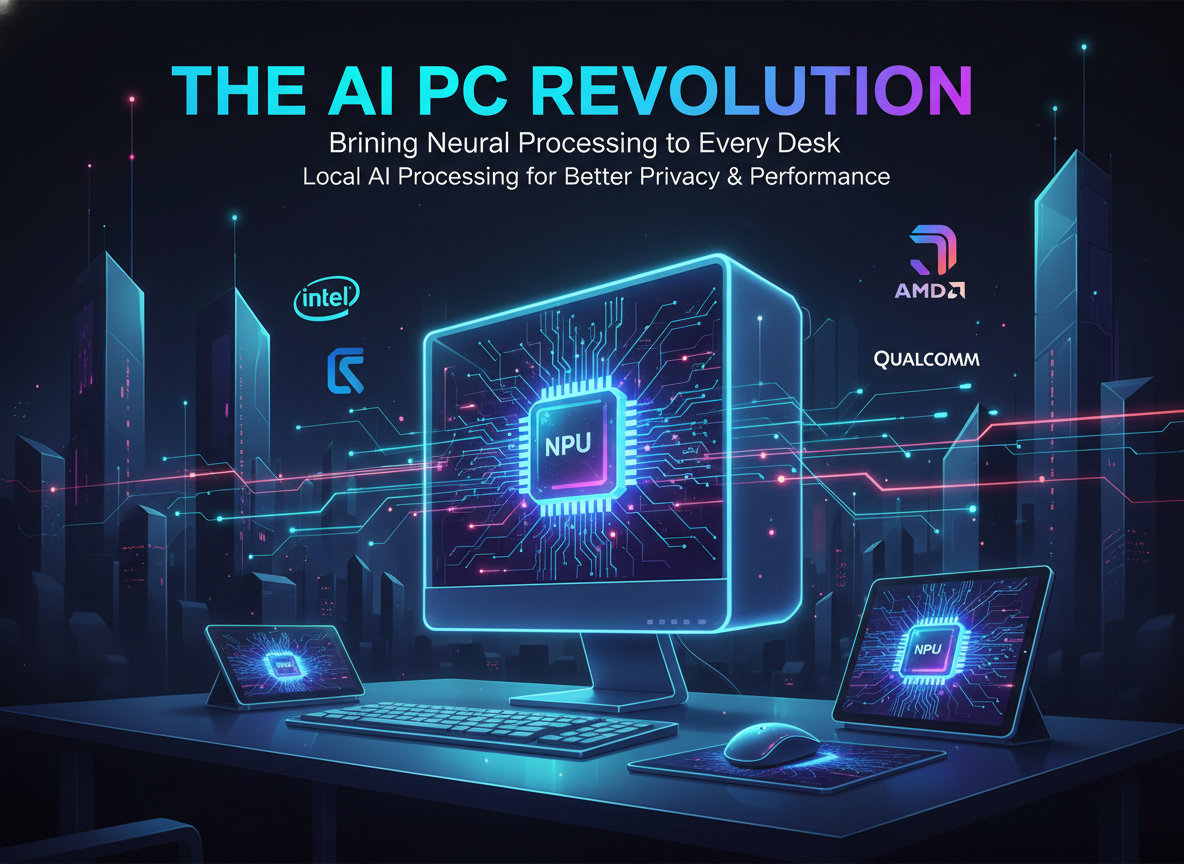
The personal computer is undergoing its most significant hardware transformation in decades. Major silicon players including Intel, AMD, and Qualcomm are now integrating dedicated Neural Processing Units (NPUs) directly into their laptop and desktop processors. This shift marks the birth of the 'AI PC,' a category of device designed to handle artificial intelligence workloads locally rather than relying exclusively on the cloud.
Local AI processing offers three main advantages: reduced latency, lower costs, and enhanced privacy. By running large language models or image generators on the device's NPU, users no longer need to send sensitive data to remote servers. This is particularly important for enterprise users who must comply with strict data sovereignty regulations. Furthermore, offloading AI tasks from the CPU and GPU to the NPU significantly improves battery life, as NPUs are architecturally optimized for the matrix mathematics required by neural networks.
Software ecosystems are rapidly adapting to this new hardware. Microsoft's latest Windows 11 updates include Copilot integration that can leverage local NPUs for tasks like live captions, background blur in video calls, and advanced file searching. As developers begin to optimize their applications using frameworks like OpenVINO and ONNX Runtime, the AI PC will move from a niche enthusiast product to a standard requirement for productivity and creative professionals worldwide.