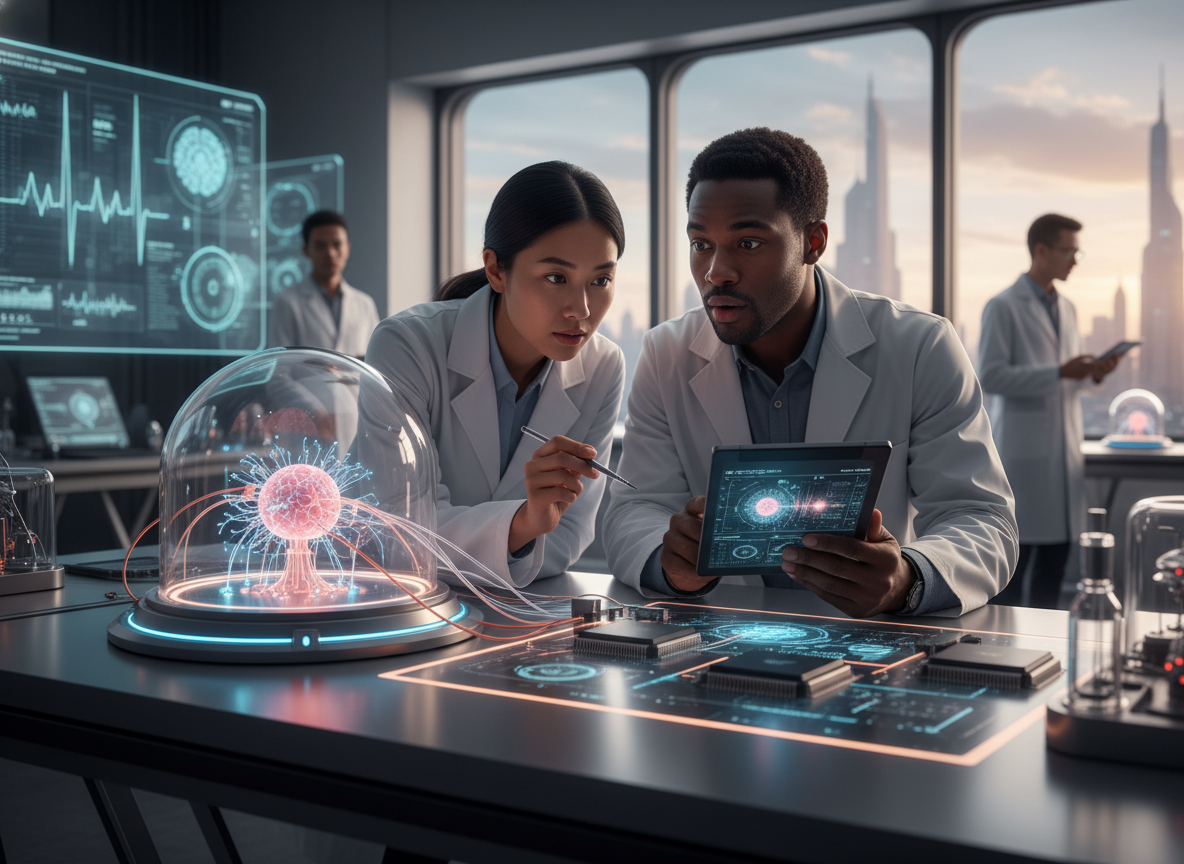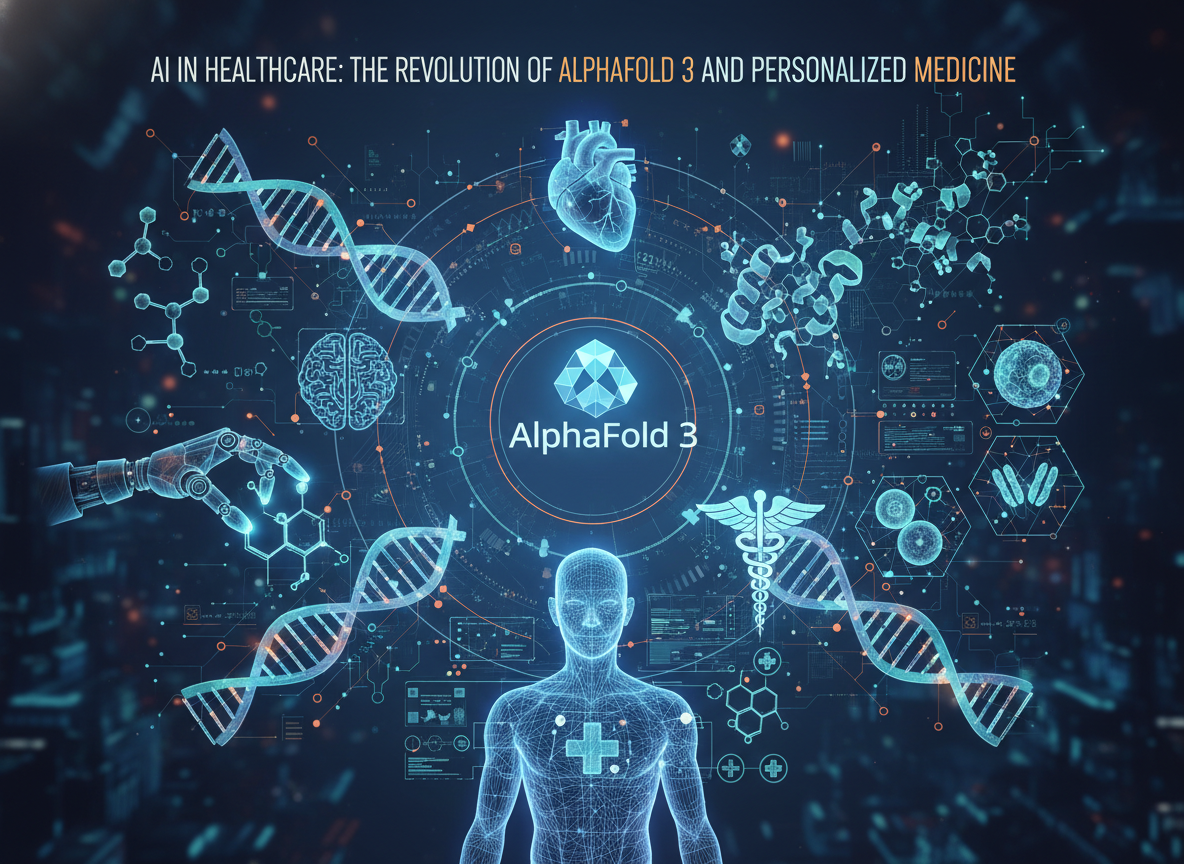
The intersection of artificial intelligence and biology is arguably the most impactful frontier of modern science, with the potential to cure diseases that have plagued humanity for centuries. At the heart of this revolution is Google DeepMind's AlphaFold 3, a model that has solved the 50-year-old 'protein folding problem' with staggering accuracy. By predicting the 3D structures of proteins based solely on their amino acid sequences, AlphaFold has provided scientists with a comprehensive map of the human proteome. This tool is now being expanded to predict how proteins interact with other molecules, such as DNA, RNA, and ligands, which is the key to understanding the molecular basis of life. The speed and precision of these predictions have condensed decades of laboratory work into a few minutes of computation.
The impact on drug discovery is immediate and transformative, as pharmaceutical companies can now identify potential drug targets with unprecedented speed. Traditionally, developing a new drug takes over a decade and costs billions of dollars, with a high failure rate in clinical trials. AI-driven platforms are changing this dynamic by simulating how candidate drugs will bind to their targets and predicting potential side effects before a single physical experiment is conducted. This 'in silico' approach allows researchers to explore a vast chemical space that would be impossible to navigate manually. We are already seeing the first AI-designed drugs entering human clinical trials, marking a new era of efficiency in biotechnology.
Beyond drug discovery, AI is enabling the rise of personalized medicine, where treatments are tailored to an individual's unique genetic makeup. By analyzing genomic data alongside environmental factors and lifestyle choices, AI models can predict a patient's risk for specific diseases and recommend the most effective interventions. This shift from a 'one-size-fits-all' approach to a data-driven, individualized model of care has the potential to significantly improve patient outcomes and reduce healthcare costs. Machine learning algorithms are also being used to analyze medical imaging, such as MRIs and CT scans, detecting subtle patterns that might be missed by the human eye. This leads to earlier diagnoses of conditions like cancer and Alzheimer's, when they are most treatable.
The integration of AI into clinical workflows is also helping to alleviate the burden on healthcare professionals, who are often overwhelmed by administrative tasks and data entry. Natural Language Processing (NLP) models can automatically transcribe patient consultations and update electronic health records, allowing doctors to focus more on patient care. AI-powered triage systems can help prioritize patients in emergency rooms based on the severity of their symptoms, ensuring that those in critical condition receive immediate attention. As these tools become more sophisticated, they will act as intelligent co-pilots for clinicians, providing real-time insights and decision support based on the latest scientific literature.
Data privacy and security are paramount in the field of AI healthcare, as the use of sensitive medical information requires strict adherence to ethical standards. Ensuring that data is anonymized and stored securely is essential for maintaining patient trust and complying with regulations like HIPAA and GDPR. There is also the challenge of 'algorithmic bias,' where AI models trained on non-representative datasets may produce inaccurate results for certain demographic groups. Addressing these biases requires a concerted effort to collect diverse data and implement rigorous testing protocols. The healthcare industry must find a balance between the need for data sharing to drive innovation and the absolute necessity of protecting individual privacy.
The role of synthetic biology is also expanding thanks to AI, allowing scientists to design entirely new biological systems with specific functions. From engineered bacteria that can clean up oil spills to synthetic tissues for organ transplants, the possibilities are limited only by our imagination. AI models are used to design these biological components, ensuring they function correctly within a living organism. This 'bio-foundry' approach is accelerating the development of sustainable fuels, biodegradable plastics, and new agricultural products. The convergence of AI, biology, and engineering is giving us the tools to not only understand life but to actively shape it for the better.
Regulatory bodies are currently grappling with how to evaluate and approve AI-based medical devices and software. Unlike traditional drugs, AI models are dynamic and can continue to learn and change over time, presenting a unique challenge for safety assessments. The FDA and other global agencies are developing new frameworks that allow for iterative updates while ensuring that the core performance and safety of the technology are maintained. Transparency and explainability are key requirements, as clinicians need to understand why an AI system is making a particular recommendation. As the regulatory landscape matures, we can expect to see a more streamlined path to market for innovative AI healthcare solutions.
Looking to the future, the synergy between AI and biotechnology will likely lead to breakthroughs in longevity and regenerative medicine. We are beginning to understand the molecular mechanisms of aging and how we might intervene to extend the human 'healthspan.' While the prospect of significantly extending human life raises profound ethical and social questions, the immediate goal remains the eradication of chronic and infectious diseases. The digital transformation of biology is a historic shift that will redefine what it means to be healthy and how we deliver care. As we continue to unlock the secrets of the human body through AI, the dream of a future without disease moves closer to reality.