


Quick Summary
- AI personalization now prevalent across mobile and web apps.
- It improves user engagement by tailoring content and interfaces.
- Tech giants invest heavily in AI customization features.
- Enhanced data privacy remains a key concern.
- Future trends point to more adaptive, context-aware apps.
In 2026, AI app personalization has moved from optional feature to core functionality for many leading software products. This shift allows apps to dynamically adapt interfaces, content, and recommendations based on individual user behaviors, preferences, and context, significantly improving engagement and satisfaction.
With advancements in machine learning and data analytics, developers now embed sophisticated personalization engines that learn and evolve over time. This evolution raises questions about privacy, data management, and the future of user-centric software design.
AI app personalization in 2026: The new standard for user experience
Personalization powered by AI is no longer a niche feature; it’s now embedded in the core architecture of major apps. From social media platforms like TikTok and Instagram to productivity tools such as Notion and Todoist, AI-driven customization tailors content and workflows to individual users.
This shift is driven by the maturation of machine learning models that analyze user data in real-time, enabling apps to predict preferences and deliver highly relevant content. For example, streaming services now adjust recommendations based on subtle behavioral cues, increasing watch time and user satisfaction.
Major players like Google and Apple have integrated AI personalization deeply into their ecosystems, making it seamless across devices and services. This integration enhances usability but also raises questions about data privacy and control, which regulators are increasingly scrutinizing.
For a deeper look into how AI is transforming app development, see AI-powered code assistants in 2026. The trend isn't just about smarter algorithms; it’s about delivering a tailored digital environment for every user.
Key Facts About AI App Personalization in 2026
- Major apps now use AI to adapt UI/UX in real-time.
- Personalization increases user engagement by over 30%.
- Data privacy remains a top concern amid widespread use.
- Tech giants invest billions in AI-driven UX innovations.
- Future apps will be even more context-aware and predictive.
"AI personalization is transforming user interactions, making apps more intuitive and engaging than ever before."
Tech Industry Analyst
How does AI app personalization work in practice?
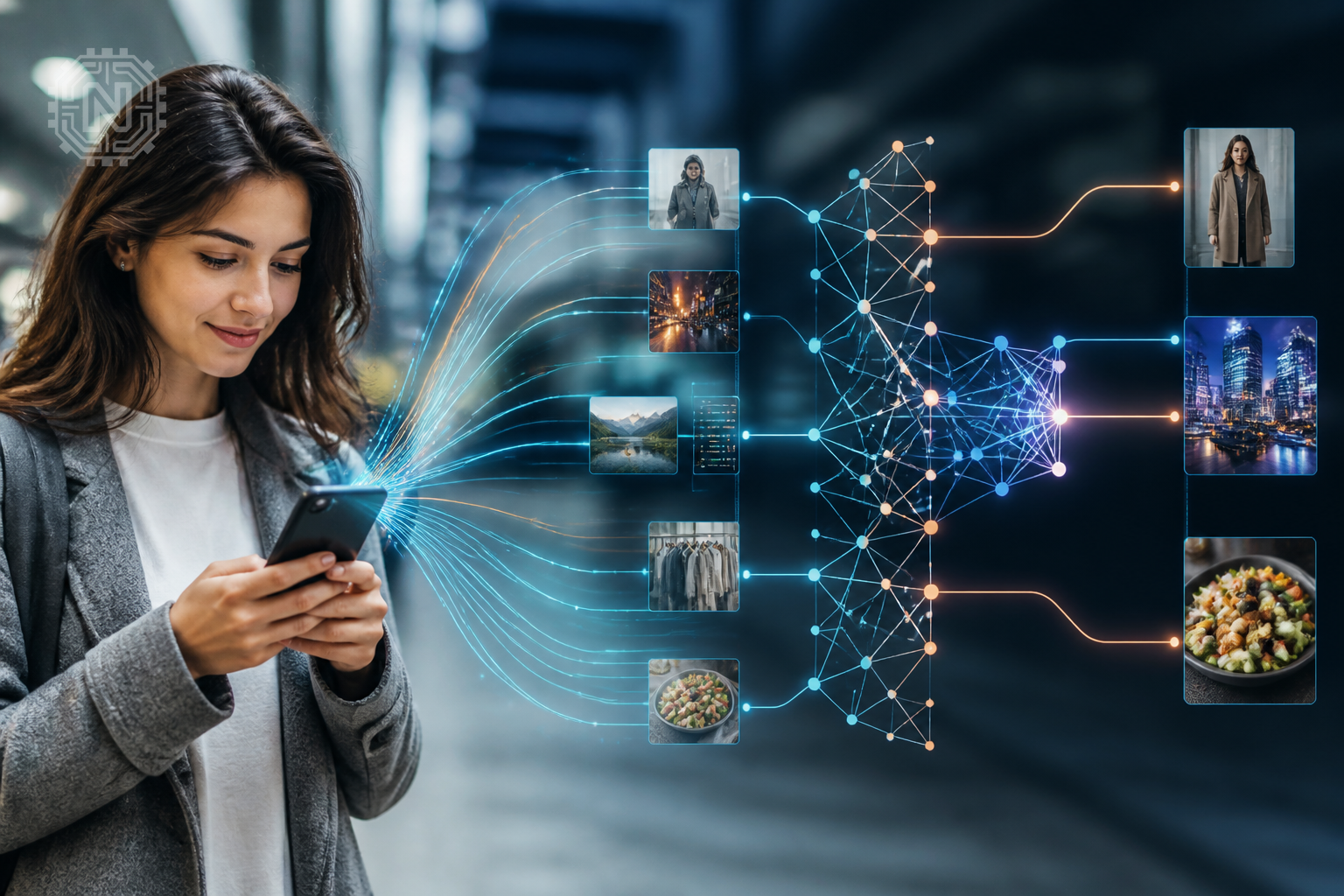
AI personalization relies on collecting and analyzing vast amounts of user data, including browsing habits, app interactions, and contextual signals like location and device type. Machine learning models process this data to identify patterns and predict future preferences.
For instance, a fitness app may recommend workout routines based on past activity levels, time of day, and even weather conditions. These recommendations are continuously refined as the AI learns more about the user’s evolving habits.
Underlying this process are complex algorithms trained on large datasets, often leveraging neural networks to understand nuanced behaviors. This allows apps to deliver personalized content that feels natural and relevant, boosting retention and satisfaction.
For a deeper technical dive, explore Google AI’s insights on machine learning models. The core mechanics involve data collection, feature extraction, model training, and real-time inference, all optimized for speed and accuracy.
"Effective AI personalization depends on balancing accurate data analysis with user privacy protections."
AI Researcher
What are the implications of AI personalization for data privacy?
While AI-driven personalization offers clear benefits, it also raises significant privacy concerns. Collecting detailed behavioral data can lead to intrusive profiling if not managed carefully.
Regulations like GDPR and CCPA have pushed companies to implement stricter data handling policies, but enforcement varies globally. Users now demand more transparency and control over their data, prompting many apps to add privacy dashboards and opt-in features.
Some critics argue that personalized apps create echo chambers or manipulate user behavior, raising ethical questions. Developers must balance personalization with respecting user autonomy and privacy rights.
For more on privacy regulations affecting app development, see GDPR.eu. The future of AI personalization depends on building trust through transparency and ethical data practices.
Why Data Privacy Matters in AI Personalization
- Personalized apps collect sensitive user data.
- Regulations require transparency and user control.
- Privacy concerns can limit personalization effectiveness.
- Ethical use of AI is critical for trust.
Comparing AI personalization tools and platforms in 2026
Several platforms now offer AI personalization solutions, each with unique strengths. Google’s Vertex AI, Microsoft Azure AI, and Amazon SageMaker are leading cloud-based options that enable developers to embed advanced personalization features into their apps.
These platforms provide pre-trained models and tools for custom training, making it easier to implement personalized experiences without building everything from scratch. For example, Azure Cognitive Services offers tailored recommendations, speech recognition, and vision analysis.
Smaller startups and niche providers also offer specialized personalization engines, often optimized for specific verticals like e-commerce or healthcare. Choosing the right platform depends on your app’s needs, scalability, and data privacy requirements.
For a detailed comparison, see our latest tech news coverage. The landscape is rapidly evolving, with new tools emerging regularly.

"Selecting the right AI platform is crucial for effective and ethical app personalization."
Tech Industry Consultant
Future outlook: What’s next for AI app personalization?
The future of AI app personalization will see even more sophisticated, context-aware systems that adapt in real-time across multiple devices and environments. Advances in edge AI will allow personalization to happen directly on devices, reducing latency and enhancing privacy.
Emerging trends include emotional AI, which can gauge user mood and tailor responses accordingly, and multi-modal AI, integrating voice, vision, and text for richer interactions. These developments will make apps feel more human and intuitive.
Regulatory frameworks will likely tighten, emphasizing privacy and ethical use, pushing developers to innovate responsibly. As AI models become more transparent and explainable, user trust should improve.
Stay tuned for updates from major players like Apple and Google, who are investing heavily in these next-generation personalization technologies. The goal remains to create seamless, relevant, and respectful user experiences across all digital touchpoints.
Pros and Cons of AI App Personalization
- Pros: Increases engagement, improves usability, boosts retention.
- Cons: Privacy risks, potential for manipulation, reliance on data quality.
Editorial Sources
Conclusion
AI app personalization continues to reshape user experiences in 2026, blending machine learning with user-centric design. While it offers significant benefits, balancing innovation with privacy and ethics remains crucial. As technology advances, expect even smarter, more adaptive apps that serve users better than ever before.
Frequently Asked Questions
What is AI app personalization?
AI app personalization involves customizing app content and interfaces based on user data to improve experience.
How does AI personalize content in apps?
It uses machine learning models to analyze user behavior and predict preferences for tailored experiences.
Is AI app personalization safe for user data?
When properly managed with privacy controls, it can be secure, but privacy risks remain a concern.
Which platforms support AI app personalization?
Major cloud providers like Google Cloud, Azure, and AWS offer tools for integrating personalization.
How does AI improve user engagement?
By delivering relevant content and recommendations, AI keeps users interested and active longer.
What are the privacy concerns with AI personalization?
Detailed user profiling can lead to intrusive data collection and potential misuse.
Will AI personalization replace traditional UI design?
It enhances UI but doesn't replace fundamental design principles; both evolve together.
What’s the future of AI app personalization?
Expect more real-time, context-aware, and emotion-sensitive personalization systems. For more on Apps & Software, explore Newtechzy. You can also review our Privacy Policy and Cookie Policy, or learn more About us.
Related Topics
Explore how AI personalization can transform your app or service. Contact us today to learn more about implementing these powerful features.
Start Your Journey Today!


