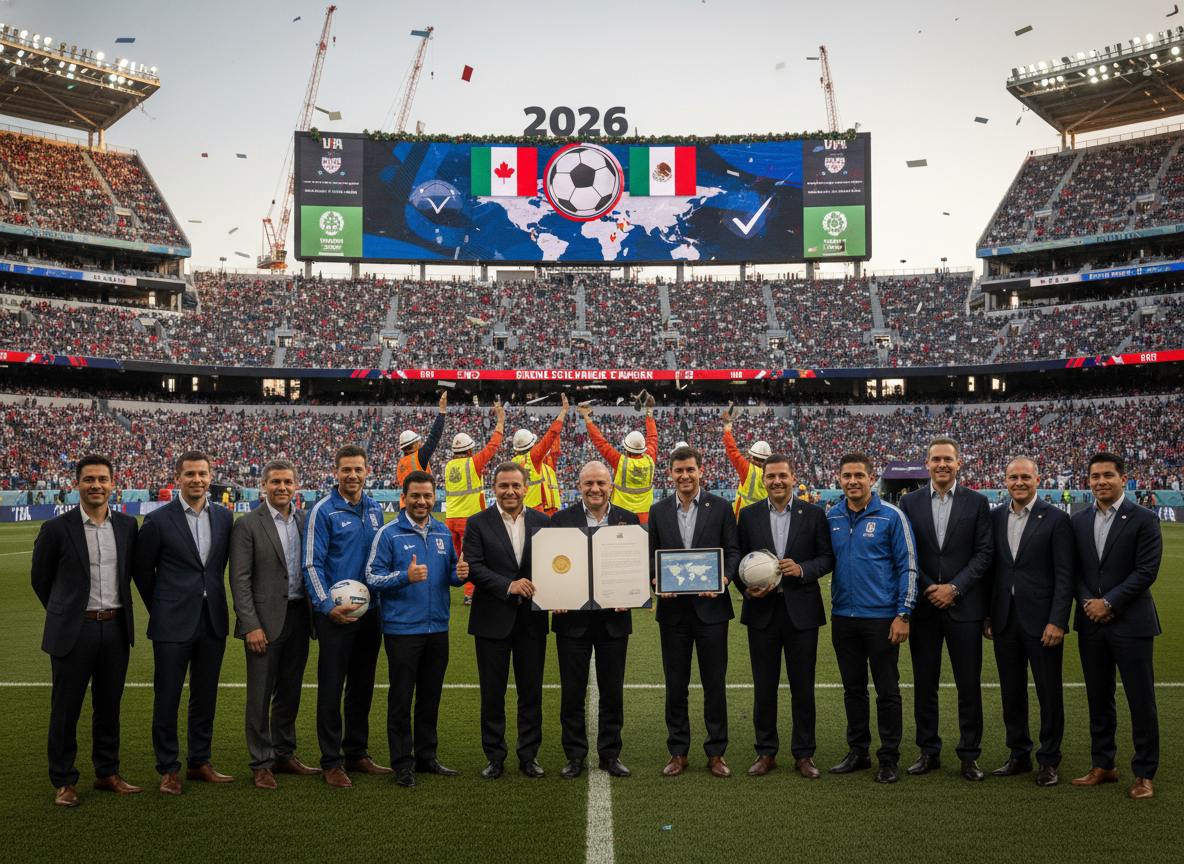
With exactly two months to go before the opening match of the 2026 FIFA World Cup, the governing body of world football has officially declared that all 16 host cities across North America are ready for action. In a press conference held at the SoFi Stadium in Los Angeles today, FIFA officials praised the unprecedented pace of construction and logistical planning. This is the first time in the tournament's history that all venues have received final certification this far in advance.
The 2026 edition is set to be the largest ever, featuring 48 teams and 104 matches spread across the United States, Mexico, and Canada. The scale of the event necessitated a massive overhaul of transportation and hospitality infrastructure. From the expansion of the Mexico City metro to the new high-speed rail links in the Northeast Corridor of the US, the 'World Cup legacy' is already being felt by local residents.
One of the major highlights of the readiness report is the implementation of 'Green Goal 2026.' All 16 stadiums have been upgraded to operate on 100% renewable energy during match days. Furthermore, a new AI-driven crowd management system will be used to streamline entry and exit, reducing wait times and improving security protocols. These innovations are expected to set a new standard for future mega-events.
In Canada, the renovation of BMO Field in Toronto and BC Place in Vancouver has been completed, with both venues passing rigorous safety inspections. The Canadian government has invested heavily in 'Fan Zones' that will celebrate the country's diverse cultural heritage. Organizers expect a record number of international visitors to descend on the Great White North, boosting the local tourism sector by an estimated $2 billion.
Mexico’s iconic Estadio Azteca has undergone a multi-million dollar modernization while preserving its historic atmosphere. As the first stadium to host matches in three different World Cups, the Azteca remains the spiritual heart of the tournament. The Mexican organizing committee confirmed today that all hospitality suites and media centers are fully operational and ready to welcome the world’s press.
The United States will host the majority of the matches, including the final at MetLife Stadium in New Jersey. Local authorities have coordinated with the Department of Homeland Security to ensure a 'seamless security envelope' across all host cities. Despite the logistical complexity of managing such a vast geographic area, FIFA’s technical team expressed total confidence in the cross-border travel arrangements for teams and fans.
Ticket sales have already shattered all previous records, with over 5 million applications received for the first phase alone. The inclusion of smaller nations in the expanded format has sparked global interest, particularly in regions like Central Asia and Oceania. FIFA has also launched a new digital 'Fan ID' that integrates visa processing, match tickets, and public transport access into a single smartphone application.
As the countdown hits the 60-day mark, the excitement across North America is palpable. From the streets of Guadalajara to the skyscrapers of New York, the flags of the 48 competing nations are beginning to appear. The 2026 World Cup promises to be a festival of football that unites a continent and showcases the very best of global sport and hospitality.