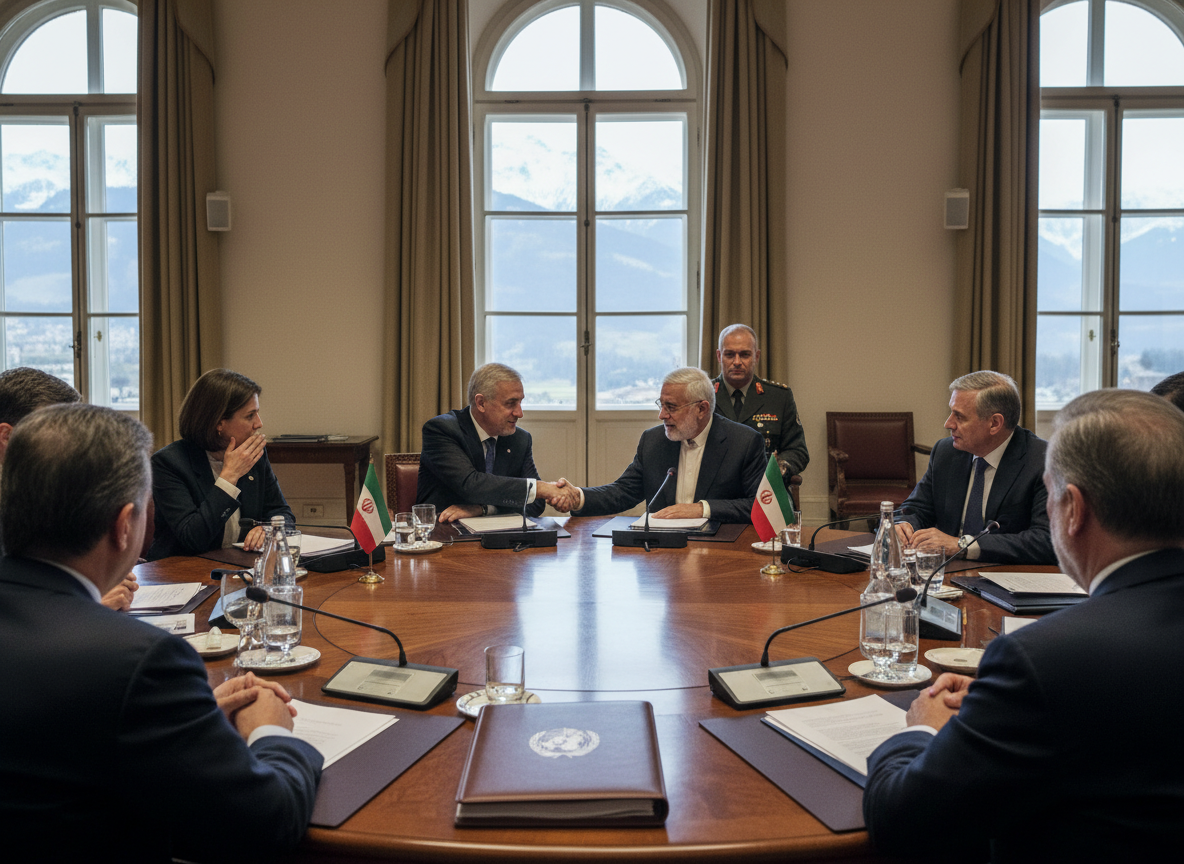
The global community turned its eyes to Geneva today as representatives from the United States and Iran finalized a modest but critical agreement aimed at keeping diplomatic channels open. This development follows a high-stakes two-week ceasefire that successfully paused hostilities across several regional flashpoints, including the Levant and the Persian Gulf. While the deal does not resolve the core issues regarding Iran’s uranium enrichment levels, it establishes a 'de-escalation framework' intended to prevent a return to the open shadow war that characterized the early months of 2026.
Presidential envoys from both nations emphasized that the primary goal of the Geneva Summit was to establish a sustainable 'hotline' between military commanders. This move comes after multiple near-miss incidents in the Strait of Hormuz where miscalculations almost led to direct naval confrontations. The summit has been described by international observers as a 'cooling-off period,' where both sides have agreed to refrain from targeted strikes for an additional sixty days while broader economic and security terms are negotiated behind closed doors.
Domestically, the Biden administration faces significant pressure from both sides of the aisle regarding the concessions made during these talks. Critics argue that the ceasefire has allowed Iranian-backed regional groups to replenish their supplies, while supporters suggest that a continued war would have destabilized global energy markets beyond repair. The White House maintain that the 'Geneva Path' is the only viable alternative to a full-scale regional conflict that could draw in nuclear-armed powers.
In Tehran, the sentiment remains cautious but firm. Iranian officials noted that any long-term resolution must include the total lifting of the latest round of electronic and banking sanctions imposed in 2025. The Iranian leadership has utilized the ceasefire to stabilize its domestic economy, which has been reeling from a combination of hyperinflation and infrastructure damage. For the Iranian public, the summit represents a glimmer of hope for a return to normalcy after years of escalating tension.
The role of the European Union as a mediator has been reinvigorated by this summit. EU High Representative Josep Borrell noted that the 'fragility of the current peace' cannot be overstated. The European delegation has pushed for a 'humanitarian-first' approach, ensuring that medical supplies and food can flow through the region without the threat of drone interference. This humanitarian corridor is one of the few concrete achievements of the first day of the summit.
Economic analysts suggest that the ceasefire's impact on oil prices has already been felt, with Brent crude stabilizing after a volatile first quarter. However, the uncertainty surrounding the long-term viability of the deal keeps investors on edge. The proposed 'tolling requirement' for passage through the Hormuz remains a major sticking point that could upend the entire agreement if Western shipping companies refuse to comply with the new Iranian maritime regulations.
Looking ahead, the next ten days of negotiations in Geneva will focus on the 'technical verification' of the ceasefire. International Atomic Energy Agency (IAEA) inspectors are seeking expanded access to sites that were previously closed off during the 2025 escalation. Iran’s willingness to allow these inspections will be the ultimate litmus test for the sincerity of their commitment to the new diplomatic roadmap.
In conclusion, the April 10 Geneva Summit serves as a critical junction for global security. While the 'neither war nor peace' status quo is inherently unstable, the formalization of talks provides a necessary buffer against immediate escalation. The world remains hopeful that this fragile deal can evolve into a robust peace treaty, though the path forward is fraught with political and military obstacles that will require unprecedented diplomatic dexterity from all parties involved.