The global fashion industry is facing a moment of reckoning this April as new Extended Producer Responsibility (EPR) regulations come into full effect across Europe and several U.S. states. These laws legally require fashion brands to take financial responsibility for the entire lifecycle of their products, including their eventual disposal or recycling. This legislative shift has turned textile waste from an environmental problem into a significant economic liability for manufacturers, sparking a rapid adoption of innovative recycling technologies.
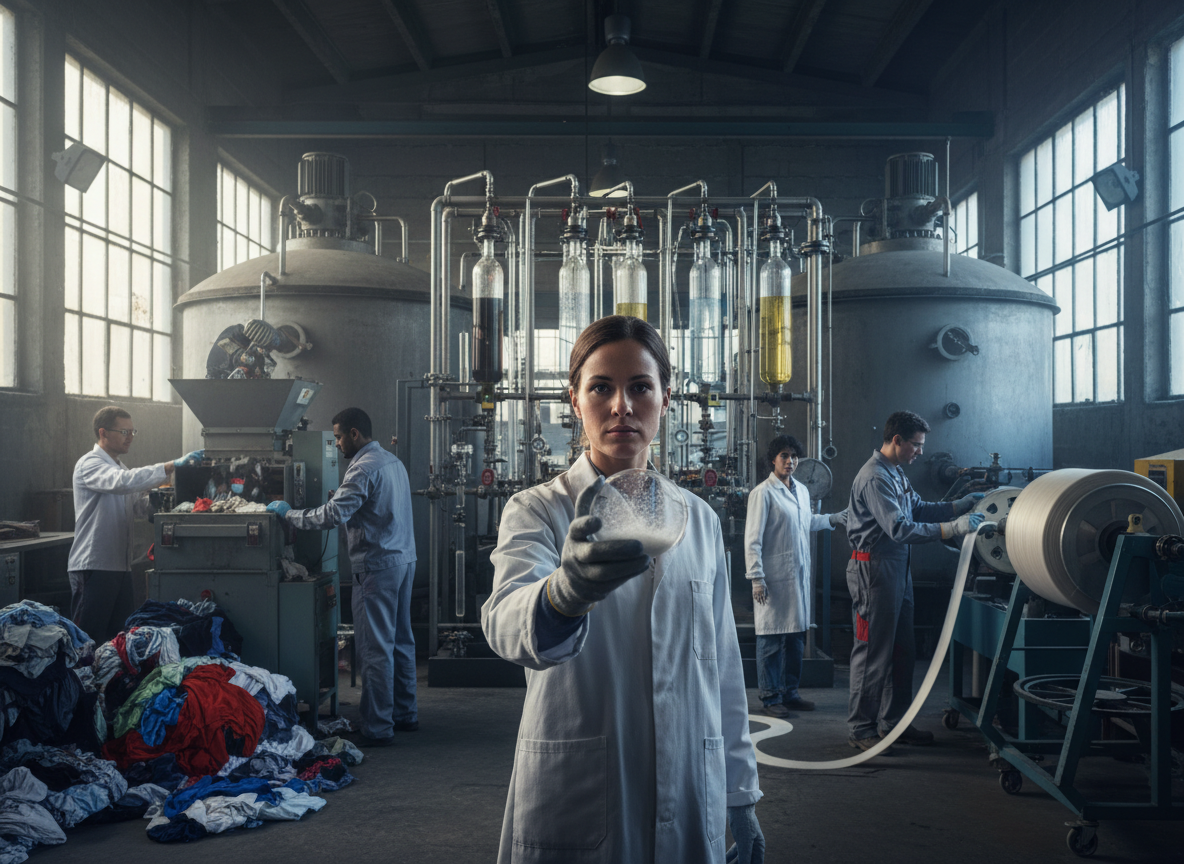
At the center of this transformation is a breakthrough in chemical recycling that has moved from the laboratory to industrial scale in early 2026. A new process utilizing room-temperature hydrochloric acid has proven highly effective at separating mixed-waste textiles, such as cotton-polyester blends, which were previously nearly impossible to recycle. The process recovers up to 75% of cotton as glucose and 78% of polyester monomers, both of which can be used to create virgin-quality materials, effectively 'closing the loop' on textile production.
The first major demonstration plants for this technology are opening their doors this month, with a target capacity of 100,000 tons annually by the end of the year. This represents a massive shift away from 'downcycling'—where textiles are turned into low-value items like insulation—toward a true circular economy. Major global retailers are already signing long-term contracts for these recycled fibers, driven by both the new regulations and a growing consumer demand for genuinely sustainable clothing options.
This focus on circularity is part of a broader 2026 trend toward 'Predictive Maintenance' for global infrastructure. By embedding IoT sensors and self-healing materials into everything from bridges to urban smart grids, engineers are now able to detect and repair structural weaknesses before they lead to failure. These self-healing coatings, which use microcapsule engineering to release healing agents when cracks form, are significantly extending the lifespan of critical infrastructure and reducing the environmental cost of constant reconstruction.
In the realm of renewable energy, 2026 has seen the commercialization of hybrid solar cells that combine traditional silicon with perovskite materials. These new cells are achieving efficiency rates far beyond what was possible just three years ago, making small-scale renewable systems more viable for residential and commercial use. This advancement is helping to stabilize energy grids as they integrate more decentralized power sources, providing a buffer against the price volatility of the global fossil fuel market.
Climate action is also being supported by breakthroughs in agricultural biotechnology. CRISPR-edited crops that are specifically designed for drought tolerance and high-salinity soil are being deployed in regions experiencing severe weather shifts. These crops are not only protecting food security but are also reducing the need for intensive irrigation and chemical fertilizers, which are significant contributors to environmental degradation. This 'Climate-Smart Agriculture' is a cornerstone of the 2026 strategy to meet the mid-decade emissions targets.
Ocean health is seeing a glimmer of hope as well. New satellite-linked autonomous cleanup systems have successfully cleared several massive 'plastic patches' in the Atlantic over the last quarter. These systems use AI to identify and collect microplastics and larger debris without harming marine life. Coupled with the global shift away from single-use plastics—mandated by the 2025 Global Plastic Treaty—the amount of new plastic entering the oceans has dropped to its lowest level in three decades.
As we reach the middle of 2026, the transition to a sustainable global economy is no longer a choice but a mandatory path forward. The combination of strict regulatory pressure, breakthrough technology, and a fundamental shift in corporate accountability is finally aligning economic success with environmental health. While the challenges of climate change remain immense, the innovations of 2026 demonstrate that with the right incentives and technological tools, a circular and sustainable future is not only possible but increasingly inevitable.