The skyline of Tokyo is glowing with more than just neon today as the city officially launches 'Q-Net,' the world's first commercial-grade quantum computing grid. Developed through a partnership between the Japanese government and a consortium of tech giants, this infrastructure allows private companies to lease 'qubit-time' for complex calculations that were previously impossible for classical supercomputers. The launch marks a pivotal shift from quantum experimentation to practical, everyday economic utility.
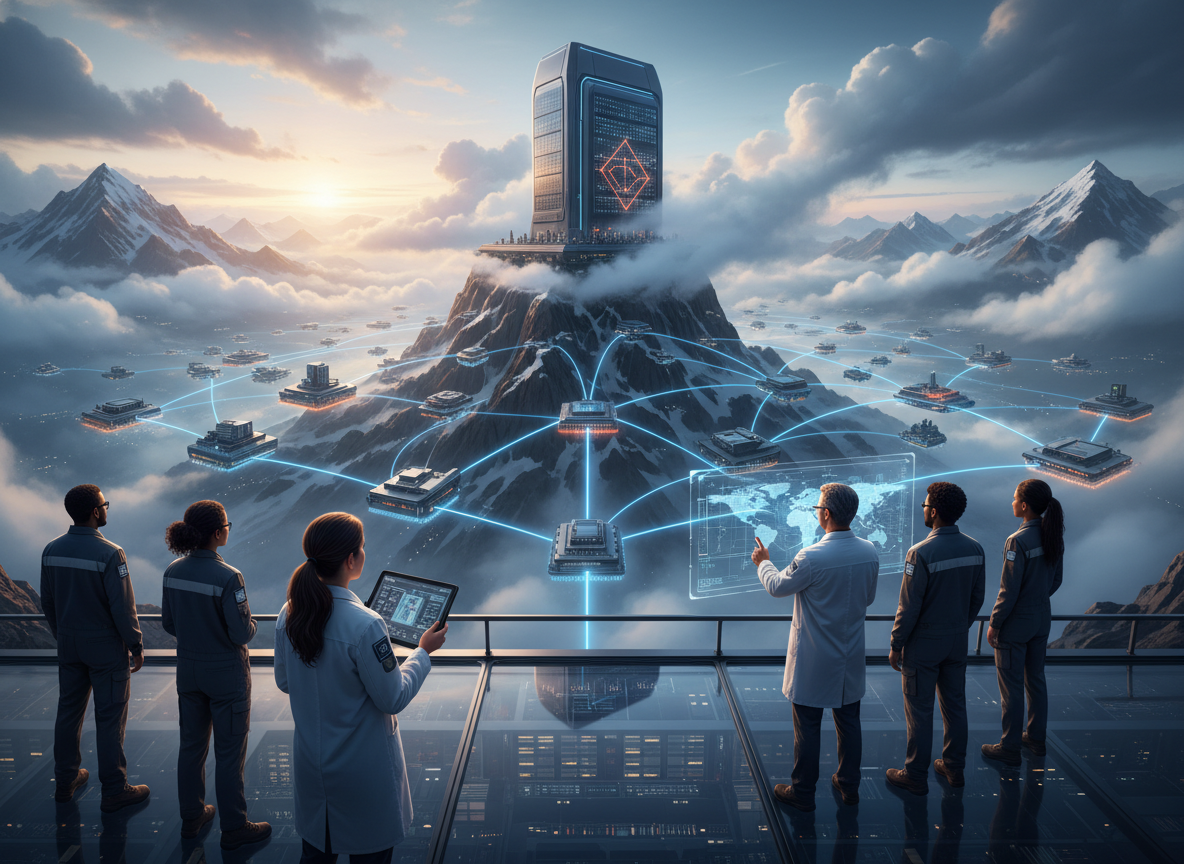
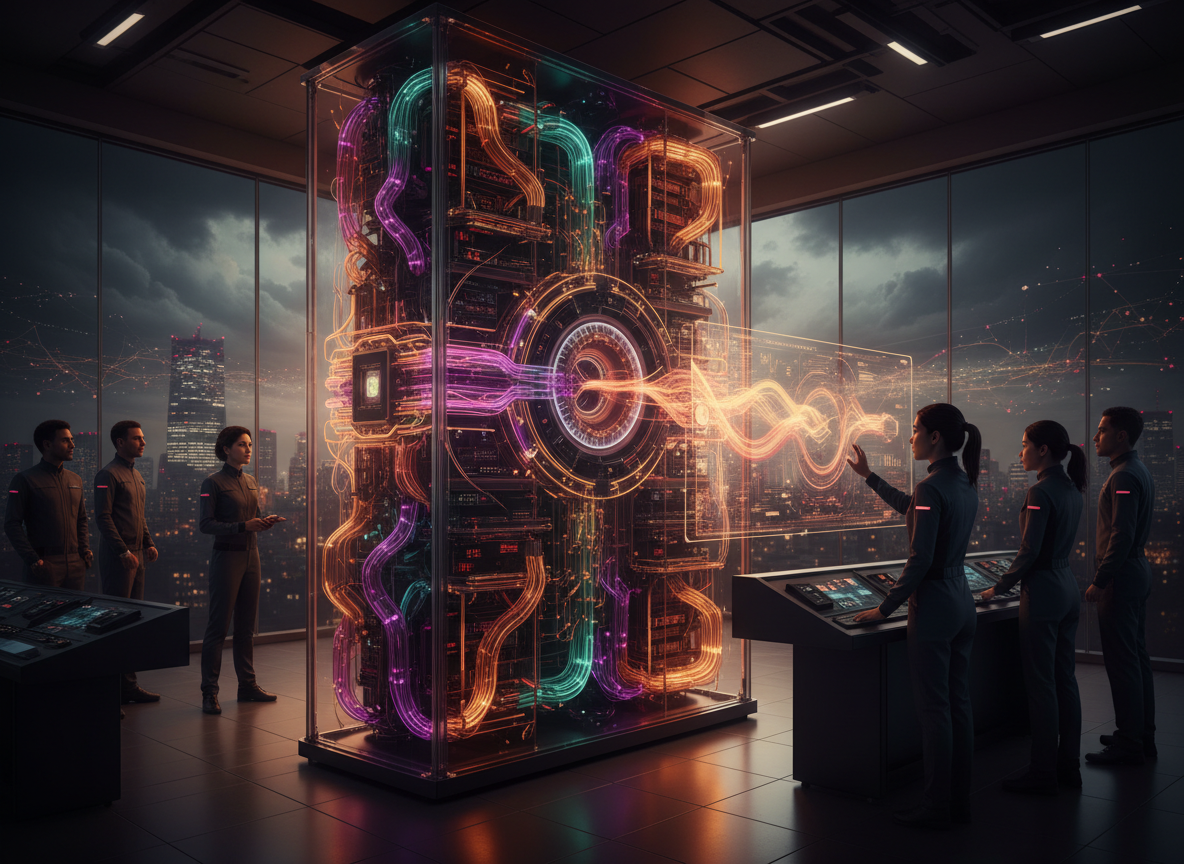
At the heart of Q-Net is a distributed network of topological quantum processors, which are significantly more stable than the superconducting qubits used in earlier prototypes. These processors operate at temperatures near absolute zero but are now housed in compact, modular units that can be integrated into existing data centers. This decentralization is the key to the grid's success, as it minimizes latency and allows for real-time quantum-classical hybrid processing for industries like high-frequency trading and urban traffic management.
The primary driver for the Q-Net rollout is the looming threat of 'Q-Day'—the point at which a quantum computer can break modern RSA encryption. To counter this, Tokyo’s new grid incorporates a Quantum Key Distribution (QKD) layer, providing unhackable communication channels for the city's financial and governmental institutions. This move positions Japan as a global leader in cybersecurity, offering a blueprint for other metropolitan areas to secure their digital infrastructure against future quantum threats.
Beyond security, the pharmaceutical industry is expected to be the biggest beneficiary of this breakthrough. By utilizing quantum simulations, researchers can now model molecular interactions at the atomic level with 100% accuracy. This effectively eliminates the 'trial and error' phase of early drug development, potentially shortening the time it takes to bring life-saving treatments to market from a decade to mere months. Several biotech startups have already relocated to Tokyo to take advantage of this unprecedented computational power.
The logistics and manufacturing sectors are also seeing immediate benefits. Q-Net's optimization algorithms are currently being used to manage Tokyo's autonomous delivery drone network and its ultra-efficient public transit system. By solving the 'traveling salesman problem' in milliseconds, the grid has reduced energy consumption across the city's transport network by an estimated 15%, demonstrating how high-level physics can lead to tangible environmental improvements.
However, the rise of commercial quantum computing has sparked a fresh debate over the 'quantum divide.' Critics argue that only the wealthiest nations and corporations will have access to these tools, potentially widening the gap between the technological 'haves' and 'have-nots.' In response, the Tokyo consortium has announced a 'Quantum for Good' initiative, which reserves 10% of the grid's capacity for non-profit academic research and humanitarian projects in developing countries.
Educational institutions in Japan are also pivoting to meet this new demand. Universities have introduced specialized 'Quantum Engineering' degrees, focusing on the software side of qubit manipulation. Unlike traditional coding, quantum programming requires a deep understanding of linear algebra and probability, leading to a surge in demand for mathematicians. The 'Q-Net' launch has essentially created a new labor market overnight, with 'Quantum Architects' becoming the most sought-after professionals in the tech industry.
As we look forward, the success of Tokyo's Q-Net is expected to trigger a global race to build similar grids. New York, London, and Shanghai are already in the planning stages for their own quantum networks. April 1, 2026, will be remembered as the day the 'Quantum Age' moved out of the laboratory and into the streets, forever changing the way we process information and interact with the physical world.