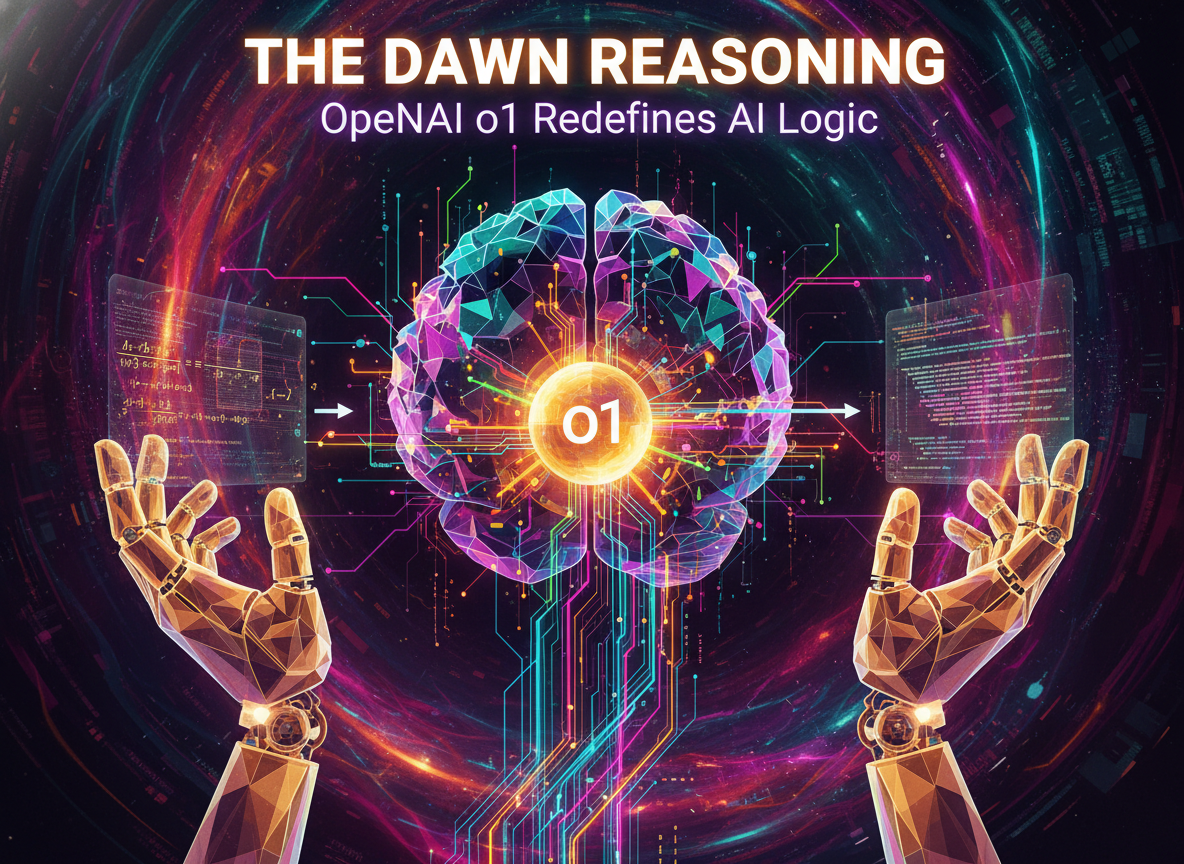
The landscape of Large Language Models has shifted from rapid-fire generation to deliberate reasoning. OpenAI's o1-preview and o1-mini models represent a significant departure from previous GPT iterations by incorporating a 'chain of thought' process during inference. Unlike predecessors that predict the next token instantly, o1 spends more time processing the prompt, allowing it to correct its own mistakes and try different strategies.
In benchmark tests, the o1 model placed in the 89th percentile on competitive programming questions and ranked among the top 500 students in the US Math Olympiad qualifier. This leap in performance is attributed to a massive scale-up in reinforcement learning, where the model is rewarded for successful reasoning paths. This development signals a new era where AI can assist in high-level scientific research and complex software architecture.
However, this reasoning power comes with a trade-off in speed and cost. Developers are finding that while o1 excels at logic, it remains slower for creative writing or simple factual queries. As OpenAI continues to refine the model, the industry anticipates a future where 'system 2' thinking becomes a standard feature of digital assistants.