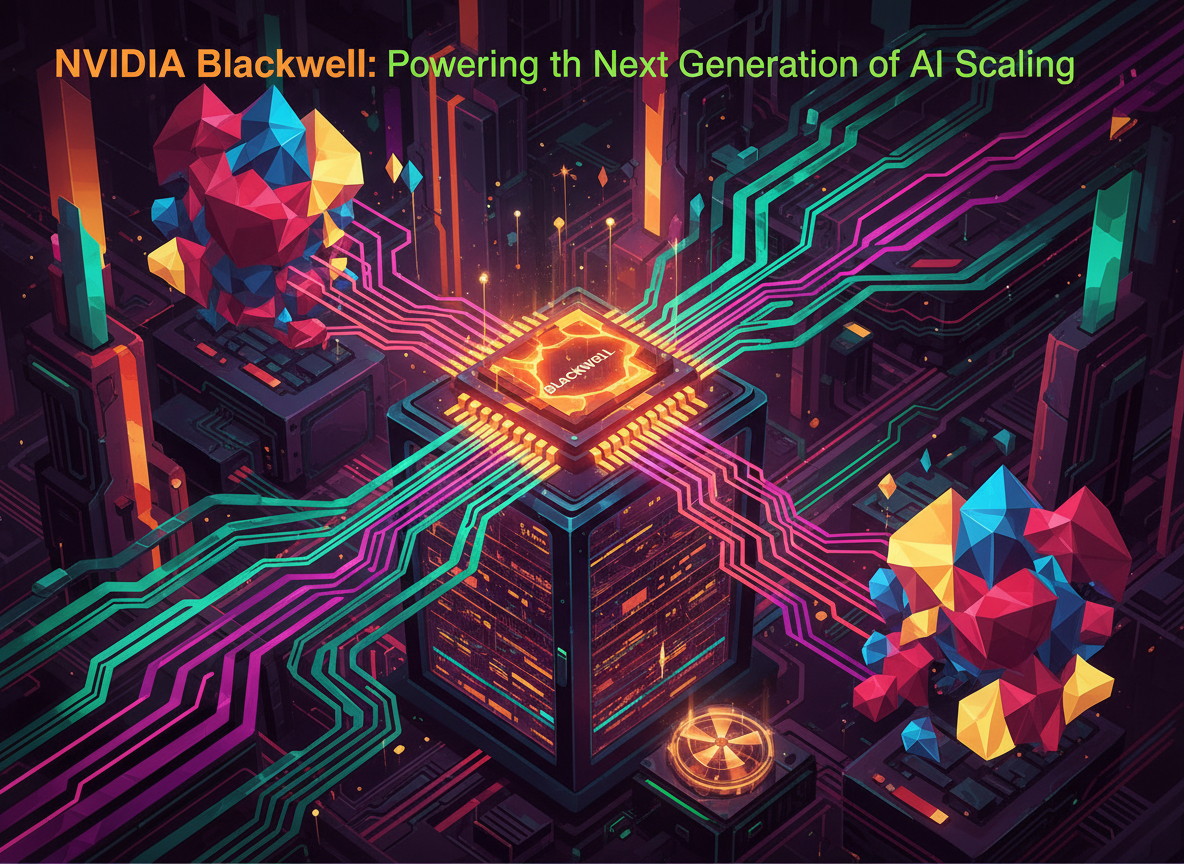
NVIDIA has officially entered the mass production phase for its Blackwell B200 and GB200 GPUs, promising a 2.5x to 5x increase in AI training performance over the preceding Hopper architecture. The new architecture focuses on a multi-die approach, allowing for higher interconnect speeds and massive memory bandwidth essential for training the next trillion-parameter models.
One of the most significant breakthroughs in Blackwell is the second-generation Transformer Engine, which utilizes new FP4 and FP6 precision levels to reduce memory footprint while maintaining high accuracy. This allows for larger models to be hosted on fewer GPUs, significantly lowering the total cost of ownership and energy consumption for cloud providers.
Major tech giants including Microsoft, Google, and Amazon have already placed massive orders for these chips. As the demand for generative AI continues to surge, NVIDIA's hardware dominance appears secured for the foreseeable future, though competitors like AMD and custom silicon from cloud vendors are working hard to close the gap.