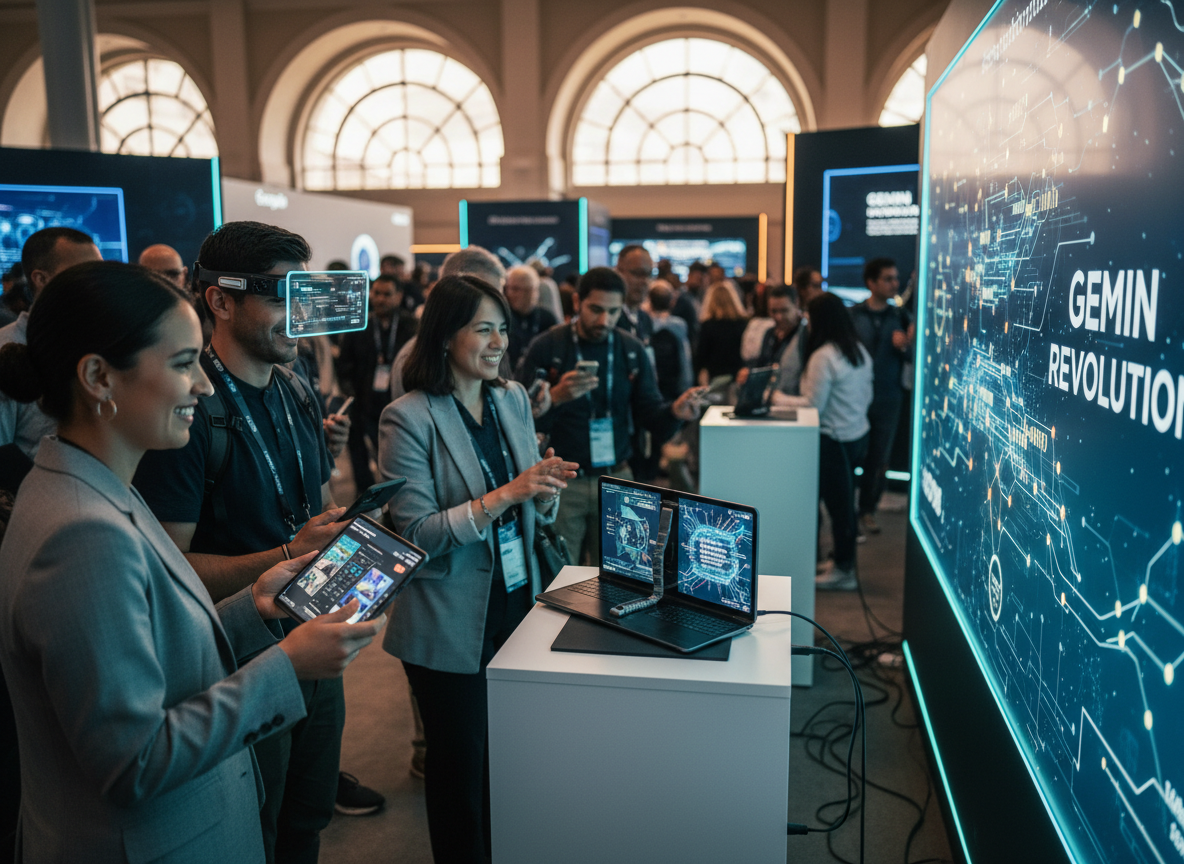
The Google Android Show 2026 has officially kicked off, marking a historic pivot in the tech giant's strategy as it shifts from a mobile-first focus to an AI-omnipresent ecosystem. Opening the keynote, Google leadership emphasized that the boundaries between operating systems are dissolving, replaced by a fluid intelligence layer known as Gemini Intelligence. This new era is defined by devices that do not just respond to queries but anticipate user needs through high-context, low-latency processing. The atmosphere in the venue was electric as the first glimpses of Android 17 were revealed, showcasing a UI that dynamically restructures itself based on the user's current environment and active tasks.
The centerpiece of the event was undoubtedly the unveiling of the 'Googlebook,' a hardware category that analysts have been speculating about for years. Bridging the gap between the portability of a Pixel tablet and the productivity of a high-end Chromebook, the Googlebook is powered by the custom-designed Tensor G6 Silicon. This device is the first to run a unified 'Android-Chrome' kernel, allowing it to natively execute mobile apps alongside desktop-grade professional software with zero performance friction. The Googlebook features a stunning 14-inch variable refresh rate OLED display and introduces a revolutionary haptic keyboard that can simulate different textures for various creative workflows.
Gemini Intelligence 3.0 was integrated into every facet of the presentation, demonstrating its ability to act as a proactive digital agent. Unlike previous iterations, Gemini 3.0 operates primarily on-device, utilizing the Googlebook’s dedicated AI processing unit to handle sensitive data without cloud round-trips. During a live demo, the assistant successfully managed a complex multi-stage travel itinerary, negotiating flight changes and booking local transport in real-time, all while the user was engaged in a separate video conference. This level of autonomy marks a significant leap from reactive assistants to truly predictive personal companions.
Android 17, codenamed 'Quince Tart,' was detailed as the software backbone for this new hardware. The OS introduces a feature called 'Neural Intent,' which uses the front-facing camera and biometric sensors to gauge user attention and intent. If you look at a physical object while holding your phone or Googlebook, the system can instantly provide context, pricing, or historical data about that object without a single tap. This spatial awareness is further enhanced by the new 'Gemini Glass' integration, suggesting that Google is finally ready to merge its AR ambitions with the mainstream Android ecosystem.
The hardware synergy between the Googlebook and the newly announced Pixel 11 Pro was a major highlight. Through a protocol called 'HyperSync,' the Googlebook can offload complex rendering tasks to the Pixel 11's GPU when they are in proximity, or vice versa. This decentralized computing model ensures that no single device is a bottleneck for high-demand tasks like 8K video editing or real-time 3D modeling. Furthermore, the shared clipboard and universal drag-and-drop features have been refined to the point where moving files between a watch, phone, and laptop feels like moving items across a single physical desk.
Privacy and security were addressed with the introduction of 'Gemini Vault.' This hardware-level security enclave ensures that the behavioral models Gemini builds to understand your habits are never uploaded to Google's servers. Instead, a process called Federated Learning allows the global model to improve without ever seeing individual user data. This move is a clear response to increasing global scrutiny over AI data harvesting, positioning Google as a leader in 'Privacy-First Intelligence.' The Vault also secures the new 'Digital Identity' feature, which is set to replace physical passports and driver's licenses in supported regions by late 2026.
Developers were not left behind, as Google announced the 'Gemini Native SDK.' This toolkit allows third-party developers to plug directly into the Neural Intent engine, enabling their apps to react to user context automatically. For instance, a music app could automatically lower the volume and transition to a focused playlist when the Googlebook detects the user has entered a library or study space. The shift toward 'intent-based development' signifies a departure from traditional menu-driven navigation, moving toward a future where apps disappear into the background until they are precisely needed.
As the Google Android Show 2026 concluded, the message was clear: Google is no longer just a search or software company, but a holistic provider of intelligent experiences. The Googlebook represents the physical manifestation of this vision, while Gemini Intelligence provides the cognitive glue that binds the entire ecosystem together. With pre-orders for the Googlebook starting today and Android 17 set for a late-summer rollout, the tech landscape is about to undergo its most significant transformation since the original launch of the smartphone. The competition will undoubtedly struggle to match this level of hardware and software integration in the coming year.