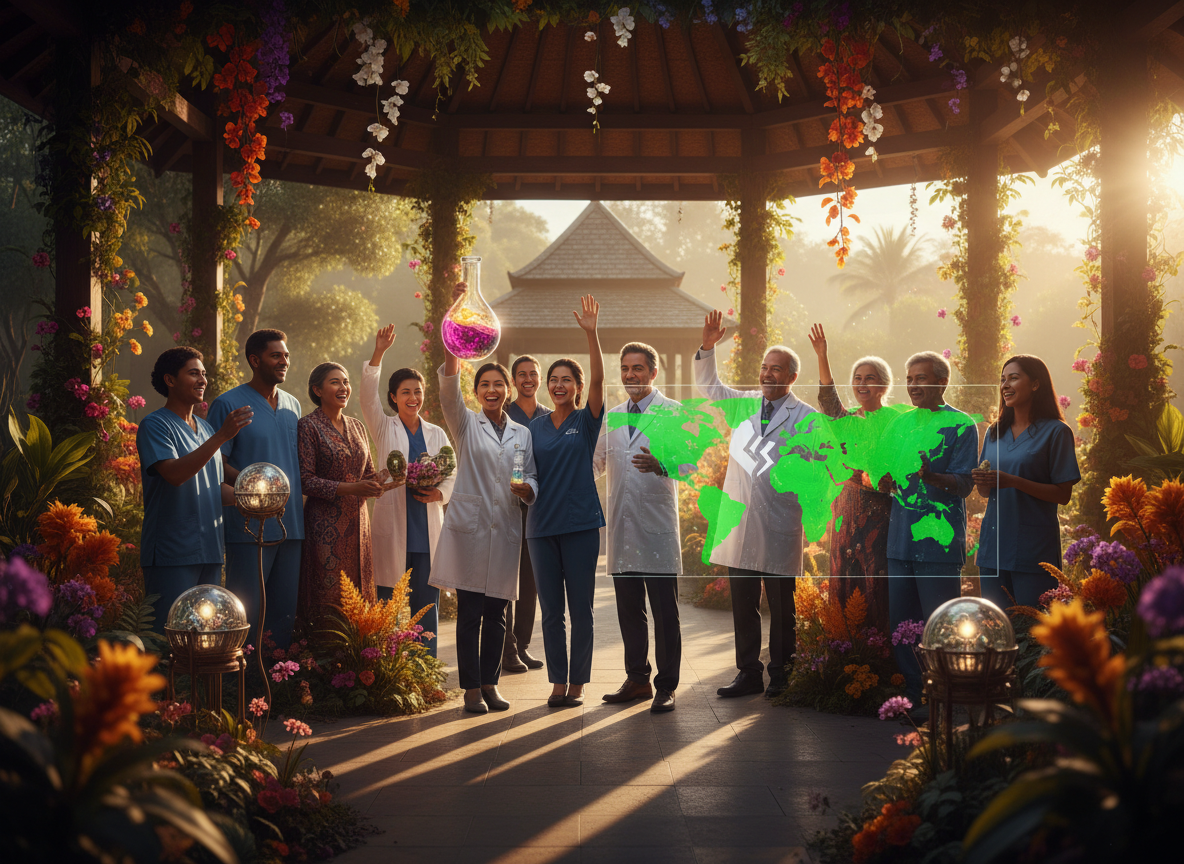
In what is being described as the greatest public health achievement since the eradication of smallpox, the World Health Organization (WHO) has today officially declared South America and Southeast Asia as 'Malaria-Free.' This milestone, announced from the WHO headquarters in Geneva, marks the end of a multi-century struggle against a parasite that has claimed millions of lives. The success is attributed to a massive, coordinated campaign that combined next-generation mRNA vaccines with innovative genomic mosquito control.
The 'R21/Matrix-M' vaccine, which began widespread rollout in 2023, proved to be the decisive weapon. By 2025, the vaccine had achieved a 95% efficacy rate across all age groups, effectively breaking the cycle of transmission in human populations. Governments in the affected regions, supported by the Bill & Melinda Gates Foundation and the Global Fund, implemented a 'last mile' delivery strategy that reached the most remote jungle and rural communities, ensuring that no one was left vulnerable.
Parallel to the vaccination effort, the use of 'Gene Drive' technology revolutionized pest control. Scientists released genetically modified mosquitoes that carry a trait preventing their offspring from reaching maturity or carrying the malaria parasite. While controversial in its early stages, the precision of these genomic tools allowed for the targeted suppression of specific malaria-carrying species without harming the broader ecosystem or non-target insects like bees and butterflies.
The economic impact of this eradication is staggering. Malaria has historically cost the affected regions billions of dollars in lost productivity and healthcare expenses. With the disease gone, these nations are expected to see a significant 'health dividend,' with improved school attendance, higher agricultural yields, and a surge in tourism to previously 'high-risk' areas. Economists predict that the eradication could boost the GDP of Southeast Asian nations by as much as 2.5% over the next decade.
Health workers on the ground have shared stories of profound change. In the Amazon basin, clinics that were once filled with feverish children are now being repurposed for maternal health and chronic disease management. The 'Malaria-Free' certification requires three consecutive years of zero indigenous cases, a feat that involved rigorous surveillance and testing. Thousands of community health volunteers were trained to use AI-powered rapid diagnostic kits, which could identify the parasite in seconds using just a drop of blood.
However, the WHO warned that the fight is not over. Sub-Saharan Africa remains the final frontier in the global battle against malaria. While progress there has been significant, with a 60% reduction in cases since 2022, the continent's unique environmental and logistical challenges require a continued and intensified effort. The lessons learned in South America and Southeast Asia—particularly regarding vaccine cold-chain logistics and community engagement—are already being applied to the African context.
The success also highlights the power of international cooperation in an era of geopolitical tension. Nations that differ on many political issues found common ground in the shared goal of eliminating a common biological enemy. This 'Health Diplomacy' has fostered new partnerships between research institutions in the Global North and South, creating a robust infrastructure that can be mobilized for future pandemics or other endemic diseases like Dengue and Zika.
As celebrations break out from Manaus to Manila, the global community takes a moment to honor the millions of lives lost to malaria throughout history. Today's announcement is more than just a medical statistic; it is a promise kept to future generations. For the first time in human history, huge swaths of the planet are safe from the 'king of diseases,' proving that with enough political will and scientific innovation, even the oldest of human tragedies can be brought to an end.