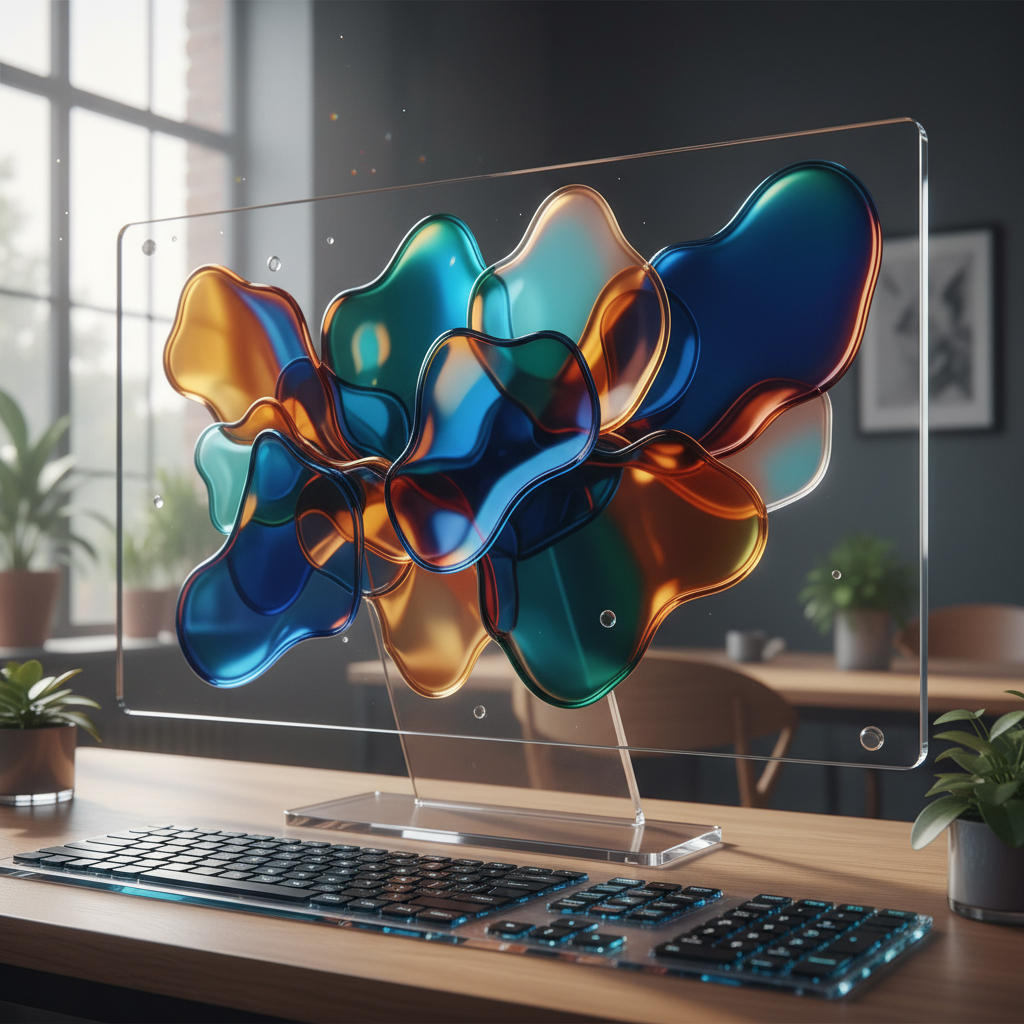
As the tech world converges on the 2026 Worldwide Developers Conference (WWDC), the spotlight has shifted intensely toward macOS 27, internally codenamed 'Skyline.' The most significant revelation of the day is the official debut of the 'Liquid Glass' interface paradigm, a design philosophy that Apple has been iterating on for nearly a decade. Unlike the static transparency of the Big Sur era, Liquid Glass in macOS 27 utilizes real-time ray-traced refraction and depth-sensing shadows to create a workspace that feels physically present. This isn't just a cosmetic skin; it is a fundamental shift in how the operating system renders light and material, making the digital desktop feel like a high-end physical workspace.
The technical foundation of this breakthrough lies in the Apple Silicon M6 chip, which includes a dedicated 'Optical Processing Unit' (OPU). This new silicon block is designed specifically to handle the complex mathematics of light simulation without taxing the main GPU cores. In previous versions of macOS, blurring and transparency effects were often resource-heavy or resulted in 'flat' visuals that lacked true depth. With macOS 27, every window behaves like a slab of high-index crystal, reflecting the desktop wallpaper and surrounding UI elements with pinpoint accuracy. The result is an interface that feels alive, responding to cursor movements and ambient lighting conditions captured by the MacBook's upgraded front-facing sensors.
One of the primary criticisms of glass-like interfaces in the past was the struggle with legibility and accessibility. Apple has addressed this in macOS 27 by introducing 'Adaptive Contrast Kernels.' These intelligent sub-routines analyze the content behind a transparent window in real-time and adjust the refractive index and text weighting to ensure that readability is never compromised. Whether you are working against a vibrant, busy photo or a stark white document, the Liquid Glass elements adjust their opacity and tint dynamically. This ensures that the aesthetic beauty of the OS does not come at the cost of professional productivity, a balance that Apple has struggled to strike until this release.
Beyond the visuals, Liquid Glass incorporates a haptic dimension that is truly revolutionary for the Mac lineup. When paired with the new Force Touch trackpads on the M6 MacBook Pro, the interface provides 'material feedback.' Dragging a window across the screen feels different depending on its simulated density; a heavy video editing suite feels more substantial than a simple Notes window. This tactile feedback loop creates a sense of spatial awareness that was previously only possible in VR environments. It effectively bridges the gap between the traditional computing experience and the spatial computing world of visionOS, making the Mac feel like a physical extension of the user's intent.
Developers are already praising the new 'GlassKit' framework, which allows third-party applications to tap into these sophisticated rendering techniques with minimal code overhead. In the early beta builds circulated today, apps like Adobe Creative Cloud and Logic Pro X are shown utilizing Liquid Glass to declutter complex toolbars. By using variable depth and translucency, these apps can hide secondary tools in 'deeper' layers of the glass, bringing them to the surface only when the user’s gaze or cursor approaches. This 'progressive disclosure' through depth significantly reduces the cognitive load for power users who deal with dozens of open palettes simultaneously.
The integration with the new Ultra-Reflective OLED displays on the 2026 Mac hardware is another critical component of why Liquid Glass finally works. These panels feature a sub-pixel layout designed to mimic the scattering of light seen in actual physical glass. When macOS 27 renders a 'frosted' sidebar, the hardware and software work in tandem to create a genuine sense of thickness. Critics who once labeled Apple’s glass effects as 'skeuomorphism 2.0' are now reconsidering, as the implementation in macOS 27 feels less like an imitation of reality and more like a new, functional digital material that enhances the user's focus.
Sustainability and efficiency have not been ignored in this graphical leap. Apple’s software engineering team has implemented a 'Neural Refresh' technology within macOS 27 that limits the high-fidelity rendering of Liquid Glass to only the active focus areas of the screen. By utilizing eye-tracking data from the built-in cameras, the OS can downscale the refraction quality in the user’s peripheral vision, significantly saving battery life. This allows the M6 MacBooks to maintain their industry-leading 24-hour battery life even while powering what is arguably the most visually complex consumer operating system ever created.
In conclusion, macOS 27 represents a milestone where Apple’s long-standing obsession with aesthetic perfection finally meets the raw computational power required to make it functional. Liquid Glass is no longer a gimmick or a drain on resources; it is a mature, sophisticated interface that leverages the full stack of Apple’s hardware and software expertise. As we move further into 2026, it is clear that this release will be remembered as the moment the Mac interface truly stepped into the third dimension, setting a new standard for the industry and proving that Apple still has the power to surprise and delight its most demanding users.