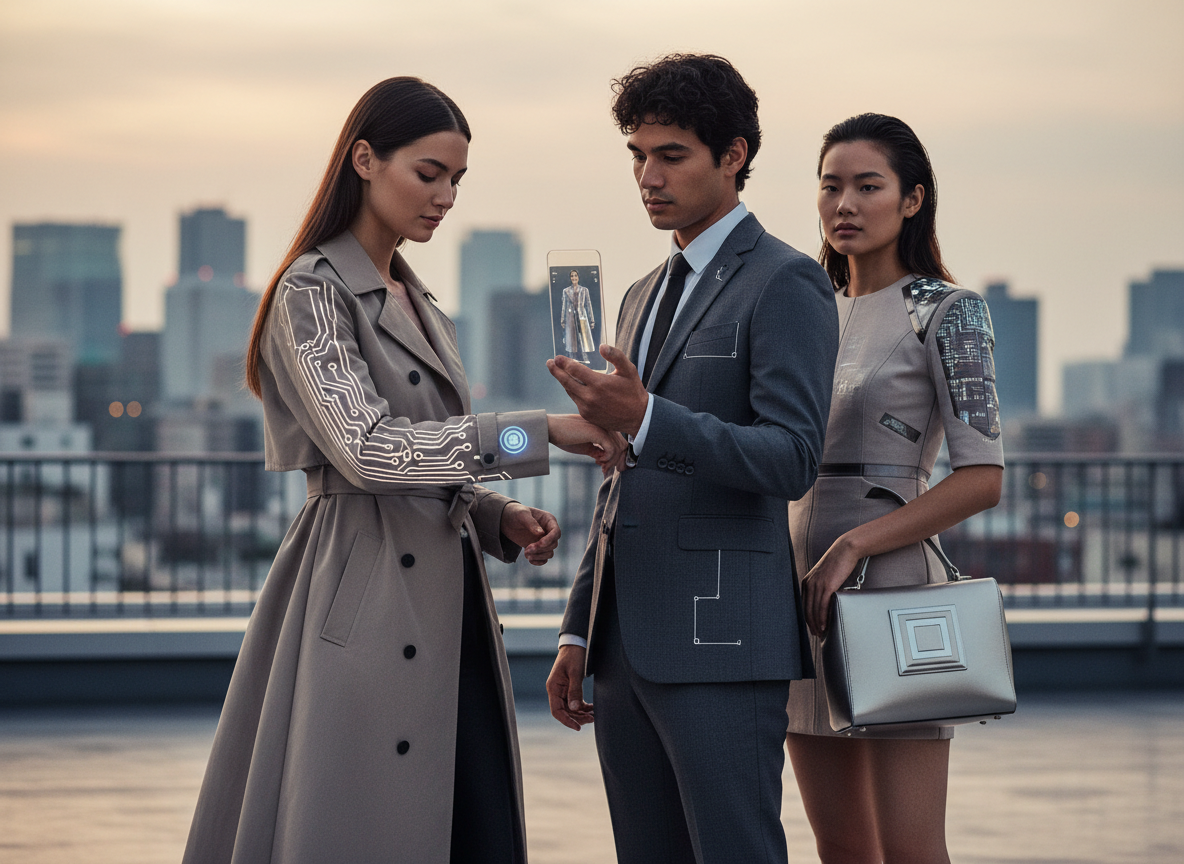
In the ever-evolving landscape of fashion, the term 'phygital' has finally graduated from a buzzword to a tangible reality. As of March 2026, the industry’s elite have embraced 'Haptic Luxury'—clothing that integrates sophisticated tactile feedback technology to enhance both the physical and digital experience of the wearer. This movement is a response to the increasing amount of time we spend in virtual environments, where the sense of touch has historically been absent. Now, fashion is providing the missing link.
The latest collection from a Milanese powerhouse, unveiled mid-March, features 'Sensory Silk' blazers. These garments contain microscopic haptic actuators woven directly into the lining. When the wearer enters a high-fidelity metaverse space, the blazer can simulate the sensation of a digital breeze or the weight of a virtual accessory. This bi-directional feedback creates a sense of presence that was previously impossible, making digital interactions feel as visceral as those in the physical world.
Beyond the metaverse, haptic fashion is serving practical, 'real-world' purposes. Several activewear brands have released 'Posture-Correcting Leggings' that use gentle haptic pulses to nudge the wearer into proper alignment during workouts or long periods of sitting. This 'Quiet Coaching' is a prime example of how 2026 fashion is focusing on holistic wellness. The clothing is no longer just a passive covering; it is an active participant in the wearer’s physical health and performance.
The design language of haptic luxury is also unique. To accommodate the necessary tech components without sacrificing silhouette, designers are using 'Hyper-Compressed' electronics and flexible, conductive threads that double as decorative embroidery. The result is an aesthetic that blends 'Old World' tailoring with 'New World' circuitry. We are seeing a return to structured, architectural forms that can house these components while maintaining the fluid movement expected of high-end garments.
Retailers are leveraging haptics to solve the long-standing problem of 'online fit.' New 'Haptic Mirrors' in virtual storefronts allow customers to feel the texture and weight of a fabric through specialized gloves or sleeves. By simulating the hand-feel of cashmere or the stiffness of raw denim, brands are significantly reducing return rates and increasing consumer confidence in high-ticket digital purchases. This technology is effectively bringing the tactile satisfaction of the physical boutique into the home.
The social aspect of haptic fashion is perhaps its most provocative feature. 'Connected Couture' allows loved ones to send 'Digital Hugs'—gentle, rhythmic pulses transmitted from one garment to another across any distance. While some see this as a step toward a hyper-mediated social life, others view it as a profound way to maintain human connection in an increasingly fragmented world. During the March fashion summits, panels on the 'Ethics of Touch' were standing-room only, highlighting the cultural weight of this technology.
Sustainability remains a core focus, even with the addition of electronics. The 2026 standard for haptic fashion requires all tech components to be easily removable for garment cleaning and fully modular for future upgrades. This 'Plug-and-Play' luxury ensures that the clothing does not become obsolete when the next generation of sensors arrives. Brands are also using kinetic energy harvesters—fabric that generates power from the wearer’s movement—to charge the haptic systems, creating a self-sustaining ecosystem.
As we look toward the second half of 2026, the phygital frontier will only expand. We are already seeing prototypes of 'Emotional Haptics' that can mimic the sensation of a heartbeat to provide comfort during stressful situations. The integration of touch into our digital and physical wardrobes is not just a technological gimmick; it is a fundamental expansion of fashion's sensory palette. In 2026, style isn't just something you see; it's something you feel.