As of today, April 10, 2026, the global geopolitical landscape is dominated by a sharp escalation in the Middle East and critical diplomatic maneuvers in the West. Former President Donald Trump, currently leading a significant political movement, has declared that the U.S. military presence near Iran will remain a permanent fixture until a 'real agreement' regarding nuclear capabilities and maritime security in the Strait of Hormuz is reached. This statement comes amid rising concerns over global oil supply chains, as Tehran continues to explore alternative shipping routes to bypass potential blockades. The rhetoric has sent ripples through international markets, with energy analysts closely monitoring the impact on Brent crude prices, which have seen a steady uptick over the last 48 hours.
In a related development, the conflict in Lebanon has intensified following a series of precision strikes by the Israeli military. Reports confirmed today that the nephew of Hezbollah chief Naim Qassem was among those killed in a recent operation, a move that has sparked widespread condemnation from regional rights bodies and renewed calls for a ceasefire from the United Nations. The strike is part of a broader Israeli strategy to diminish Hezbollah’s operational capacity, but it has simultaneously raised fears of a full-scale multi-front war that could draw in surrounding nations and further destabilize an already fragile Mediterranean security framework.
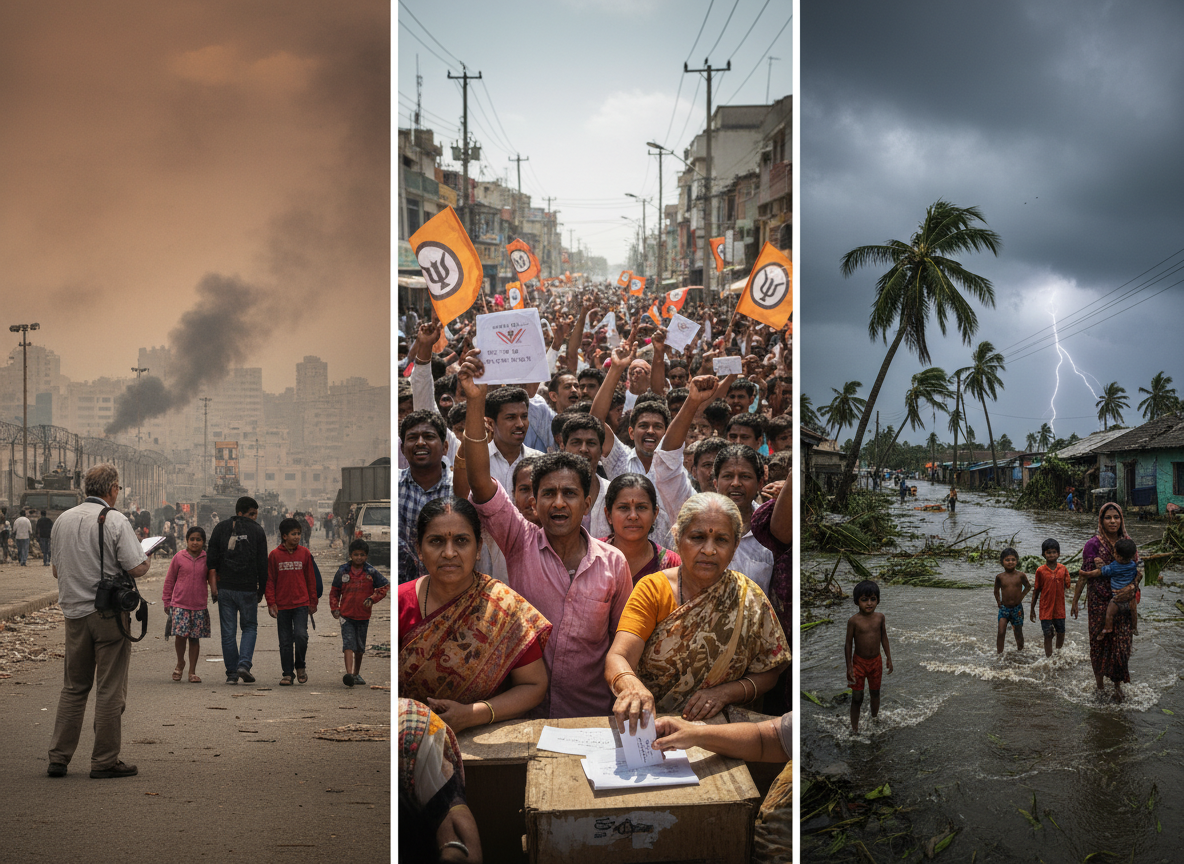
In South Asia, the 2026 Indian Assembly Elections have reached a fever pitch. Prime Minister Narendra Modi, campaigning heavily in West Bengal, has launched a blistering critique of the opposition, accusing the Congress and Trinamool parties of failing to meet the developmental aspirations of the youth. As polling progresses in states like Kerala, where turnout has already crossed the 62% mark in 140 constituencies, the political climate remains charged. National security also remains a priority as the Cabinet cleared a landmark draft amendment Bill today to implement a long-awaited women’s quota in legislative bodies, a move seen by many as a strategic masterstroke ahead of the final phases of voting.
Turning to the Pacific, severe weather patterns are causing significant disruption across the Hawaiian Islands. Governor Josh Green announced the closure of all state departments and public schools on Oahu and Maui today as a powerful storm system brings heavy rain and gusty winds to the region. The Hawaii Department of Education has cited safety concerns as the primary reason for the shutdown, with emergency services on high alert for potential flooding and landslides. This weather event coincides with a period of economic adjustment in the local real estate market, where despite high interest rates, Maui has seen a 57% year-over-year increase in single-family home sales, signaling a complex recovery for the islands.
The sports world is currently centered on two major stages: the Masters Tournament and the ongoing UEFA Champions League. In Augusta, Georgia, the world's elite golfers are navigating the challenging greens for the second round of the Masters, which remains the premier event in professional golf. Meanwhile, in Europe, the Champions League quarterfinals provided high-octane drama last night as PSG secured a hard-fought victory over Liverpool, while Barcelona suffered a surprising loss to Atletico Madrid in their first-leg encounter. Fans are already looking ahead to the return legs, which promise to be some of the most-watched sporting broadcasts of the year.
In the Indian Premier League (IPL) 2026 season, the competition is as fierce as ever. Today’s headlines were dominated by a disciplinary action against Gujarat Titans captain Shubman Gill, who was fined ₹12 lakh for a slow over-rate during a thrilling match against the Delhi Capitals. The game itself saw David Miller transition from hero to villain in a matter of overs, ultimately leading the Titans to a narrow victory. The league continues to see massive engagement both in stadiums and across digital streaming platforms, reinforcing its status as the world’s most lucrative cricket tournament and a pillar of the global sports economy.
On the domestic front in North America, news from Kansas has shocked local communities after a first responder in WaKeeney was arrested on multiple counts of child sexual exploitation. The Kansas Bureau of Investigation revealed that Dennis Dees, an EMT, was taken into custody following a lengthy investigation. Simultaneously, the state is mourning the loss of a 14-year-old girl in Great Bend; a juvenile suspect has been arrested on first-degree murder charges. These incidents have sparked a national conversation about child safety and the vetting processes for emergency personnel, with calls for legislative reform growing louder in the state capital of Topeka.
As the day concludes, the intersection of these events highlights a world in a state of rapid flux. From the glitz of Coachella's first weekend in California to the somber realities of war in Lebanon and the legal battles involving high-profile political figures in the U.S., April 10, 2026, stands as a testament to the interconnected nature of modern society. Looking forward, the next 24 hours will be critical for international diplomats as they attempt to de-escalate Middle Eastern tensions while the global public remains focused on the outcome of major cultural and sporting milestones. The resilience of the global economy and the effectiveness of international law remain the two biggest questions as we move into the second week of April.