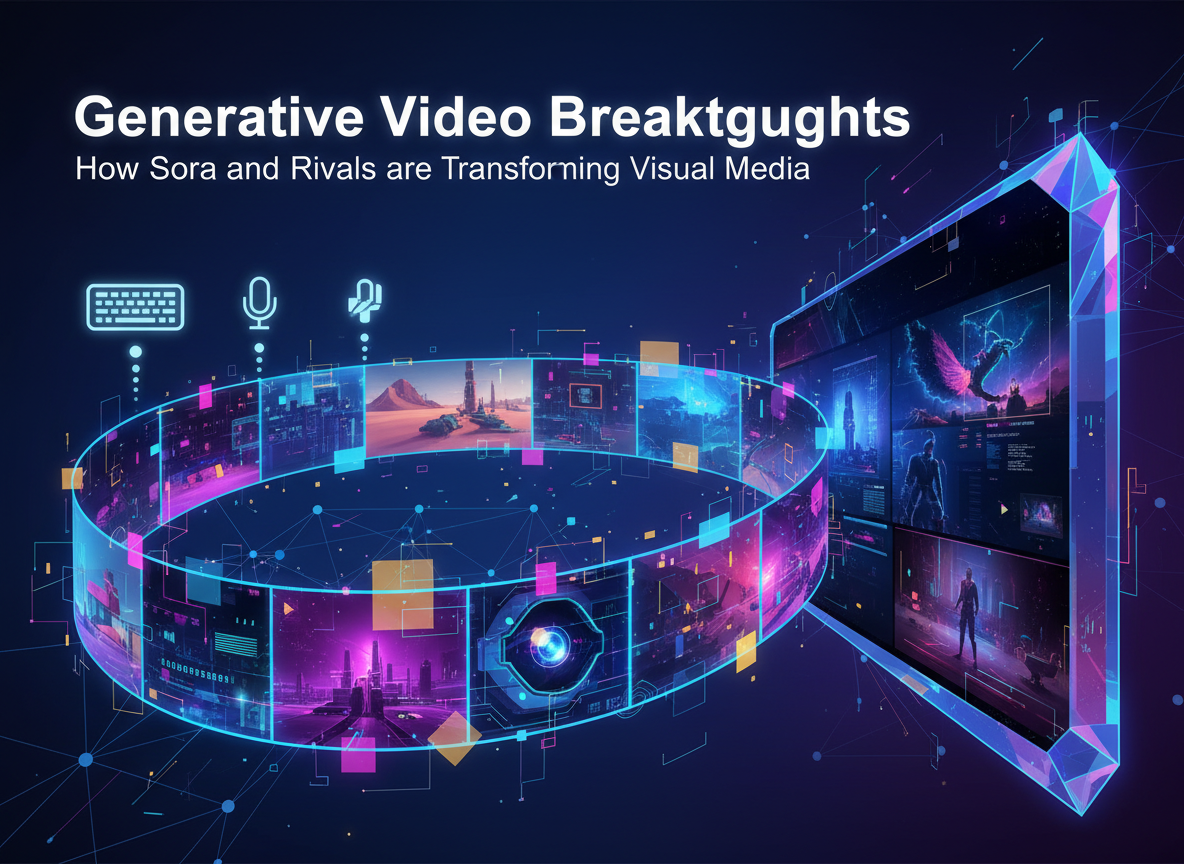
The visual storytelling landscape has been fundamentally altered by the arrival of high-fidelity text-to-video AI models. Leading the charge is OpenAI's Sora, which demonstrated an uncanny ability to generate complex scenes with consistent character physics and cinematic lighting. This breakthrough has sparked a race among tech giants and specialized startups to refine the spatial consistency and temporal coherence of generated footage, bringing the dream of instant high-quality video production closer to reality for creators worldwide.
While Sora initially captured the public imagination, competitors like Kling from China and Luma Labs' Dream Machine have quickly entered the arena, offering their own unique takes on video generation. These models utilize diffusion transformers, a hybrid architecture that combines the scaling properties of transformers with the visual generation capabilities of diffusion models. This results in video clips that can last up to several minutes with remarkably stable imagery, overcoming the 'jitter' and morphing issues that plagued earlier versions of the technology.
The implications for the film and advertising industries are profound. Traditionally, producing a high-quality cinematic shot required expensive equipment, location scouting, and a large crew. Now, a director can prototype scenes or even generate final-grade background plates using AI, drastically reducing production costs and timelines. This democratization of high-end visual effects allows independent creators to compete with major studios on a level of visual spectacle that was previously unattainable.
One of the most impressive aspects of these new video models is their understanding of physical world dynamics. By training on vast datasets of video content, these AI systems have developed an intuitive sense of gravity, fluid motion, and light reflection. When a user prompts for a scene of a car driving through a rainy city, the AI correctly simulates the reflections on the wet pavement and the way light refracts through raindrops, showcasing a level of detail that borders on the hyper-realistic.
Ethical considerations and the threat of deepfakes continue to loom large over the generative video space. As the technology becomes more accessible, the potential for creating misleading or malicious content grows exponentially. This has led to the development of sophisticated C2PA watermarking standards and AI-driven detection tools designed to verify the provenance of digital media. Ensuring that generative video remains a tool for creativity rather than deception is currently a top priority for researchers and policymakers.
The impact on the 'stock footage' market is another area of significant disruption. Why search through a library of pre-recorded clips when you can generate exactly what you need in seconds? Companies like Getty Images and Shutterstock are already pivoting by integrating generative tools into their platforms, allowing users to modify existing assets or create new ones from scratch while ensuring that the underlying training data is ethically sourced and artists are compensated.
Hardware requirements for running these video models are immense, driving a surge in demand for specialized AI chips and high-performance cloud computing. As models become more complex, the need for efficient inference—the process of actually generating the video—becomes a technical bottleneck. This is pushing the industry toward more optimized architectures and 'distilled' models that can provide high-quality output with less computational overhead, potentially allowing for real-time video generation in the near future.
As we look toward the horizon, the integration of generative video with other modalities like 3D modeling and spatial computing is inevitable. We are moving toward a world where interactive environments and immersive VR experiences can be generated on the fly. This synergy will not only revolutionize entertainment but also transform fields like architecture, education, and professional training, providing a dynamic canvas for human imagination that responds instantly to our verbal commands.