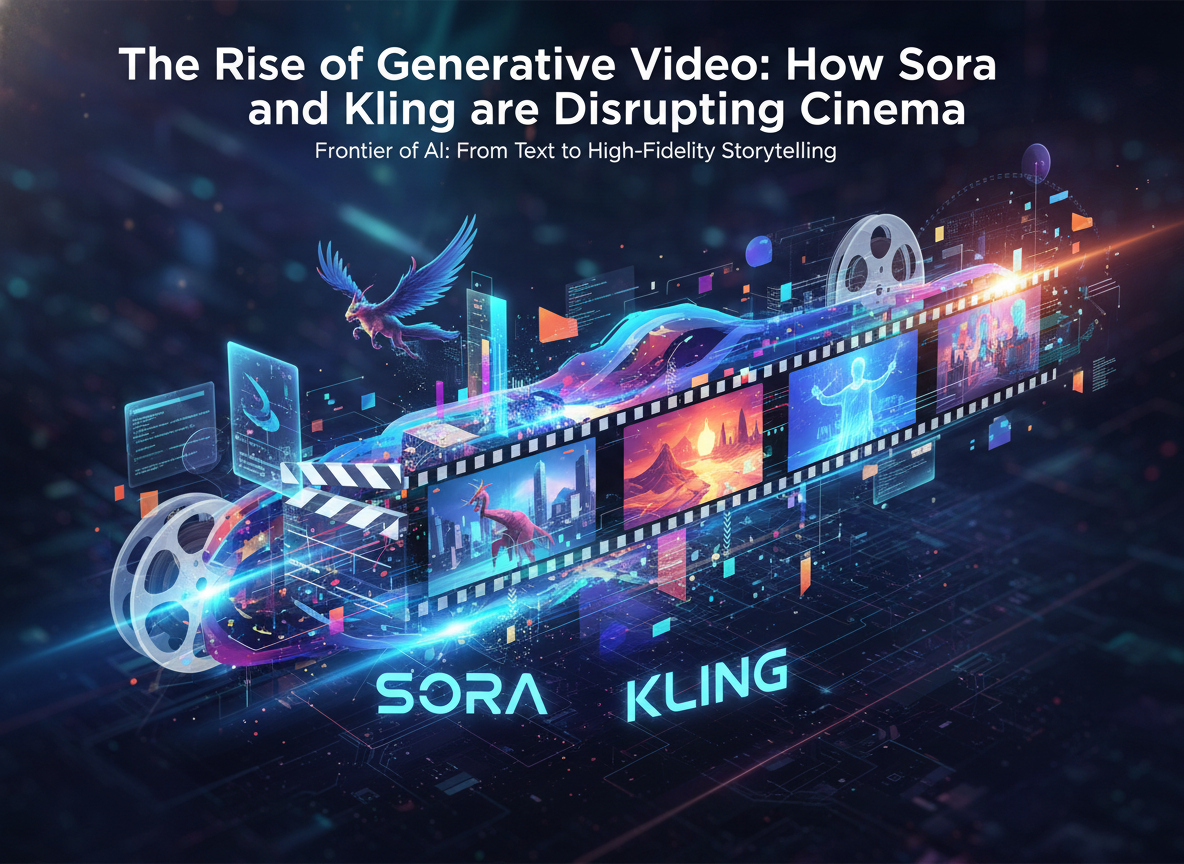
The landscape of digital content creation is undergoing a seismic shift as generative video AI moves from experimental novelties to high-definition reality. Leading this charge is OpenAI's Sora, a model capable of generating minute-long videos that maintain visual consistency and complex motion dynamics once thought impossible for algorithms. This breakthrough signifies a departure from the jittery, surrealist clips of early 2023, offering instead a glimpse into a future where high-budget visual effects are accessible to anyone with a prompt. By leveraging transformer architectures similar to those used in GPT models, Sora understands not just the pixels, but the physical laws governing the objects it depicts, creating a sense of depth and continuity that challenges traditional CGI.
While OpenAI has dominated the headlines, international competitors like Kling from China are proving that the race for video dominance is truly global. Kling has demonstrated an uncanny ability to render human-like movements and intricate textures, such as the flow of water or the fabric of clothing, with startling realism. This competition is driving rapid innovation, forcing developers to solve the 'hallucination' problem in video where limbs might disappear or backgrounds might morph unpredictably. As these models refine their spatial reasoning, the barrier between synthetic media and captured footage continues to blur, prompting both excitement and caution across the creative industries.
The economic implications for Hollywood and the broader advertising industry are profound, as production timelines could be slashed from months to mere hours. Small indie studios now have the power to visualize epic sci-fi landscapes without the multi-million dollar overhead typically required for high-end rendering farms. This democratization of visual storytelling allows for more diverse voices to bring their visions to life, though it also raises valid concerns regarding the future of traditional roles in cinematography and post-production. The industry is currently grappling with how to integrate these tools as assistants rather than replacements for human creativity.
Technologically, the secret sauce behind these advancements lies in 'diffusion transformers' which combine the scaling properties of transformers with the generative power of diffusion models. This hybrid approach allows the AI to handle vast amounts of visual data, learning the nuances of lighting, shadow, and perspective across thousands of hours of video training. As compute power continues to scale, we can expect these models to support higher resolutions and even more complex physics simulations. The goal is to move beyond simple video generation toward interactive environments where the AI acts as a real-time world builder.
However, the rapid ascent of generative video brings significant ethical challenges, particularly regarding the proliferation of deepfakes and misinformation. As the 'uncanny valley' is bridged, distinguishing between a real event and an AI-generated fabrication becomes a task for advanced detection tools rather than the naked eye. OpenAI and other major players are under immense pressure to implement robust watermarking and metadata tracking to ensure transparency. The battle against malicious use cases will likely be as intense as the development of the technology itself, requiring international cooperation and strict regulatory frameworks.
Copyright and data sourcing remain the most contentious legal battlegrounds in the AI video space. Thousands of artists and filmmakers have raised concerns about their work being used to train models that could eventually compete with them. This has led to a flurry of lawsuits and calls for 'opt-in' training protocols. The resolution of these legal disputes will define the future of the AI industry, determining whether developers must pay licensing fees for training data or if the 'fair use' doctrine will continue to apply to the ingestion of public digital content.
Looking ahead, the next step for generative video is the integration of multimodal capabilities, allowing users to direct scenes through voice and text in real-time. Imagine a virtual director's chair where you can adjust the lighting or move a character's position by simply speaking to the AI. This level of interactivity will transform gaming, education, and virtual reality, creating personalized experiences that adapt to the user's preferences. The convergence of AI video with spatial computing devices like the Apple Vision Pro will likely be the catalyst for the next era of immersive digital media.
Ultimately, the rise of Sora and its peers represents a milestone in the evolution of artificial intelligence. We are moving past the era of AI that merely mimics human patterns toward AI that understands the underlying structures of our physical world. While the transition will be disruptive and fraught with challenges, the creative potential unlocked by these tools is limitless. As we stand on the brink of this new frontier, the focus must remain on ethical implementation and the empowerment of human creators to ensure that technology serves as a bridge to new forms of artistic expression.