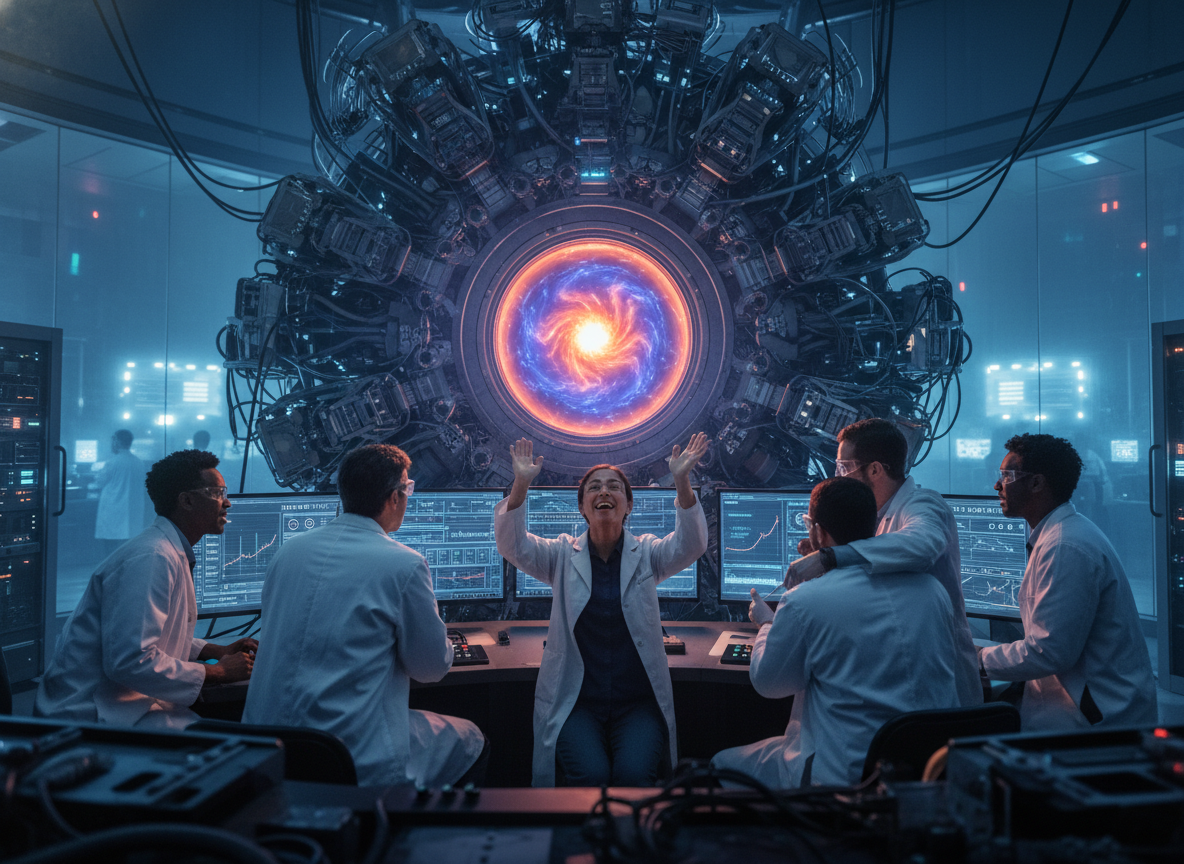
In a landmark achievement for human ingenuity, researchers at the joint International Fusion Research Center announced today, April 8, 2026, that they have successfully maintained a stable fusion plasma for exactly 602 seconds. This milestone, achieved using the newly upgraded 'Super-KSTAR' facility in collaboration with European JET scientists, shatters previous records and demonstrates that the stability issues which long plagued tokamak reactors are finally being resolved. The reaction reached temperatures of 160 million degrees Celsius, more than ten times the heat of the sun's core, without damaging the magnetic confinement walls.
The success of this experiment is attributed to the integration of the latest generation of High-Temperature Superconducting (HTS) magnets, which provided a much more precise and resilient magnetic field than previous copper-based systems. These magnets allowed the team to manipulate the plasma density in real-time using an AI-driven control system that predicts and offsets turbulence before it can lead to a confinement breach. This synergy of material science and artificial intelligence is what many experts are calling the 'final piece' of the fusion puzzle.
Dr. Aris Thorne, the lead physicist on the project, stated during a press conference in Geneva that this 10-minute burn proves that fusion is no longer a distant dream but an imminent engineering reality. Unlike previous experiments that lasted mere seconds, a 10-minute sustained reaction proves that the heat management and fuel injection systems can operate in a 'steady state.' This provides the necessary data to begin the construction of the DEMO-1 pilot plant, which is designed to be the first fusion reactor to provide net electricity to a public power grid.
The global energy sector has reacted with unprecedented enthusiasm to today's news, with international markets seeing a shift in long-term infrastructure investments. Analysts suggest that the timeline for decarbonizing heavy industry could be accelerated by nearly a decade if fusion technology can be commercialized by the late 2030s. The prospect of an energy source that produces no long-lived radioactive waste and requires only isotopes found in seawater has reinvigorated global climate commitments.
However, significant challenges remain on the path to commercialization, particularly regarding the industrial-scale production of tritium. Tritium, a key fuel component, is currently scarce and expensive to produce. The next phase of research will focus on 'breeding blankets' within the reactor that can generate tritium as a byproduct of the fusion reaction itself. Engineering these blankets to withstand the intense neutron flux of a sustained reaction remains one of the most difficult hurdles for the ITER and KSTAR teams.
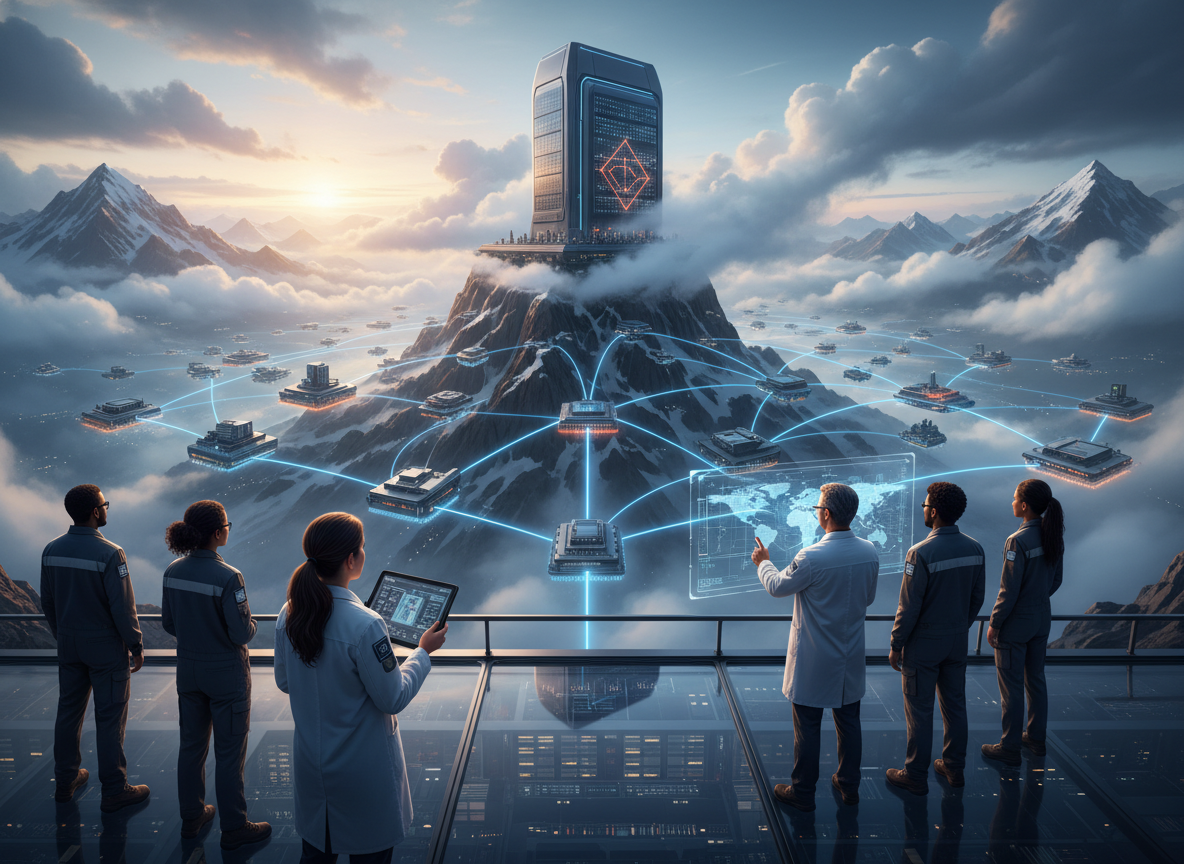
Geopolitical leaders have also weighed in, with the UN Secretary-General hailing the breakthrough as a 'victory for multilateralism.' The fusion project involves contributions from over 35 nations, proving that international cooperation remains the most effective tool for solving the world's most complex technical challenges. Plans are already being drafted to share the underlying magnet technology with developing nations to ensure that the eventual fusion transition is equitable across the globe.
Environmental advocacy groups have expressed cautious optimism, noting that while fusion is a game-changer, the world cannot wait for the 2040s to reduce carbon emissions. They emphasize that current solar, wind, and battery technologies must still be the priority for the immediate 2030 targets. Nevertheless, the successful 10-minute burn provides a beacon of hope for a future where energy is both abundant and entirely carbon-free, potentially ending the era of fossil fuel dependence forever.
As the sun sets on this historic Wednesday, the scientific community is already looking toward tomorrow's follow-up tests. The goal for the remainder of 2026 is to push the confinement duration to a full hour, a feat that would essentially confirm the feasibility of a 24/7 fusion power plant. For now, the world celebrates a day that will likely be remembered in history books as the moment the stars were finally brought down to Earth.