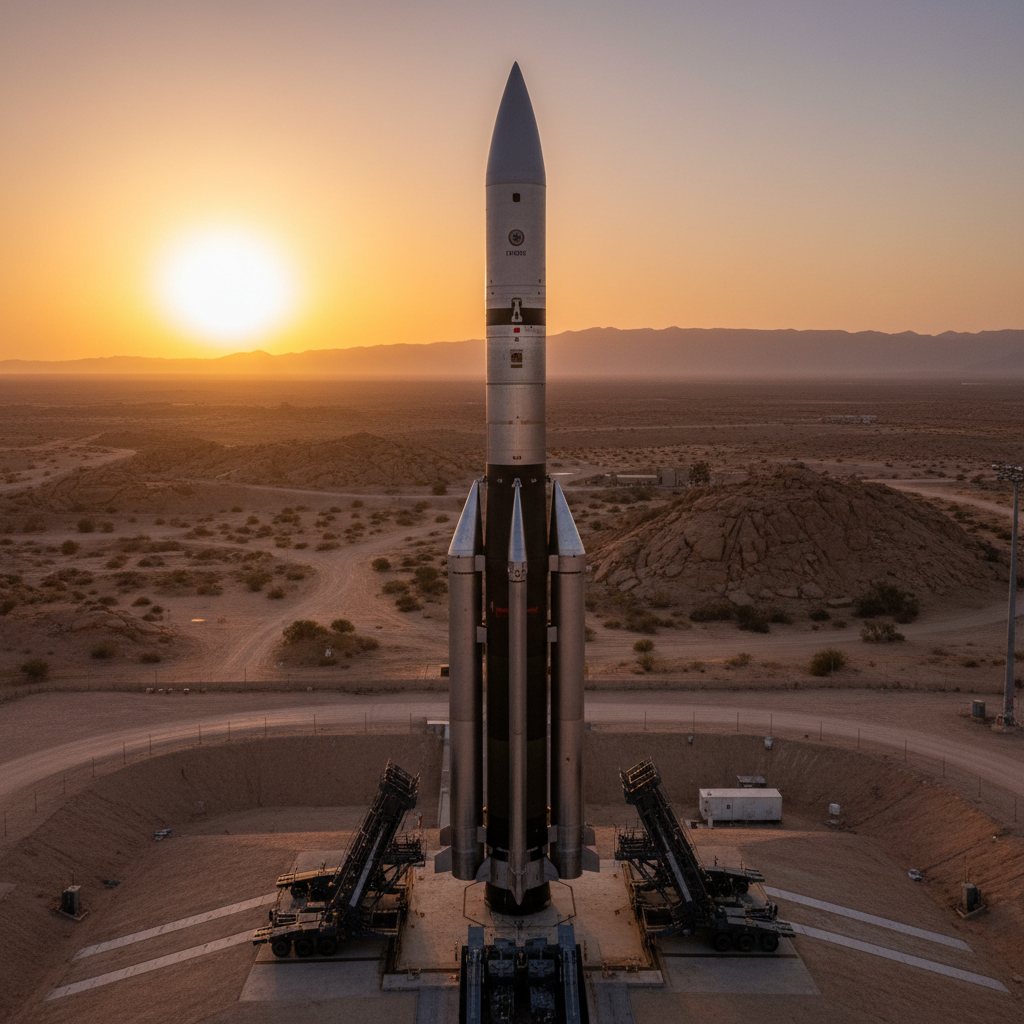
As of May 10, 2026, the Defence Research and Development Organisation (DRDO) has reached a pivotal juncture with the Agni-VI Intercontinental Ballistic Missile (ICBM) being declared ready for final induction trials. This next-generation weapon system represents the pinnacle of Indian aerospace engineering, designed to provide a credible and robust secondary strike capability. Unlike its predecessors, the Agni-VI is not just an incremental upgrade but a technological leap that transitions India from a regional power to a global strategic actor. The recent pre-induction tests conducted at the Abdul Kalam Island have confirmed the structural integrity and propulsion efficiency required for long-range trajectories, signaling a new era in India's strategic autonomy.
The defining feature of the Agni-VI is its extended range, which is officially classified within the intercontinental bracket, capable of reaching targets well beyond 10,000 kilometers. This range ensures that India can maintain a strategic balance in the Indo-Pacific and beyond, effectively deterring any potential adversary regardless of geographical distance. By bridging the gap in reach that existed with the Agni-V, the DRDO has ensured that India's nuclear triad is anchored by a land-based component that is both versatile and devastatingly effective. The missile’s three-stage solid-fuel motor allows for rapid deployment and high reliability in various environmental conditions, making it a cornerstone of the nation's defense architecture.
Perhaps the most critical advancement in the Agni-VI is the integration of Multiple Independently Targetable Re-entry Vehicle (MIRV) technology. This allows a single missile to carry multiple nuclear warheads, each capable of hitting a different target hundreds of miles apart. In the contemporary era of sophisticated Anti-Ballistic Missile (ABM) systems, MIRV capability is essential for ensuring that a retaliatory strike can penetrate multi-layered defenses. DRDO’s successful miniaturization of warheads and the development of a complex 'bus' system for warhead release signify a mature mastery over ballistic missile dynamics that only a handful of nations possess globally as of 2026.
Mobility and survivability remain the cornerstones of India's 'No First Use' (NFU) policy, and the Agni-VI excels in this regard through its canisterized launch system. Being a canister-launched missile means it can be stored for years with minimal maintenance and transported easily via road or rail on a Transporter Erector Launcher (TEL). This mobility makes it nearly impossible for enemy surveillance to track or target the missiles in a pre-emptive strike, thereby strengthening India's second-strike capability. The ability to launch from anywhere across the vast Indian landscape provides a strategic depth that is central to modern deterrence theories and operational readiness.
From a strategic perspective, the Agni-VI shifts the narrative from 'Credible Minimum Deterrence' to 'Robust Deterrence.' As regional dynamics evolve and neighboring states enhance their own missile arsenals, India's readiness with a 12,000-km class ICBM serves as a stabilizing factor. It signals that India possesses the technical and political will to protect its interests on a global scale. This development is particularly relevant in mid-2026, as geopolitical alliances shift and the need for a self-reliant defense posture—Atmanirbhar Bharat—becomes more than just a policy goal but a functional reality that commands international respect.
Technological breakthroughs in the Agni-VI extend to its advanced avionics and navigation systems. Utilizing the NavIC (Indian Regional Navigation Satellite System) for mid-course corrections, the missile achieves an unprecedented Circular Error Probable (CEP), ensuring pinpoint accuracy even at extreme ranges. Furthermore, the use of indigenous carbon-carbon composites for the heat shield allows the warheads to withstand the intense thermal stresses of atmospheric re-entry at speeds exceeding Mach 24. These innovations highlight DRDO's success in overcoming international technology control regimes through dedicated local research and development efforts over the last decade.
The readiness of Agni-VI also has significant implications for India’s role in international security architectures. It reinforces India's position as a responsible nuclear power with a transparent and defensive strategic doctrine. By maintaining a high-tech deterrent, India reduces the likelihood of conventional conflicts escalating into nuclear ones, as the cost of aggression becomes prohibitively high for any adversary. The international community views this advancement as a natural progression for a nation that seeks to play a larger role in global governance and regional stability, particularly within the context of the Quadrilateral Security Dialogue and other strategic partnerships.
In conclusion, the Agni-VI is more than just a missile; it is a symbol of India's technological sovereignty and a cornerstone of its national security framework in 2026. As DRDO prepares for the final series of user trials with the Strategic Forces Command (SFC), the message is clear: India is prepared to defend its sovereignty with the most advanced tools available. The successful development of this next-gen ICBM ensures that the nation’s deterrence remains relevant in a rapidly changing world, providing the peace and security necessary for continued economic growth. The Agni-VI stands as a testament to the vision of a secure, self-reliant, and strategically capable India.