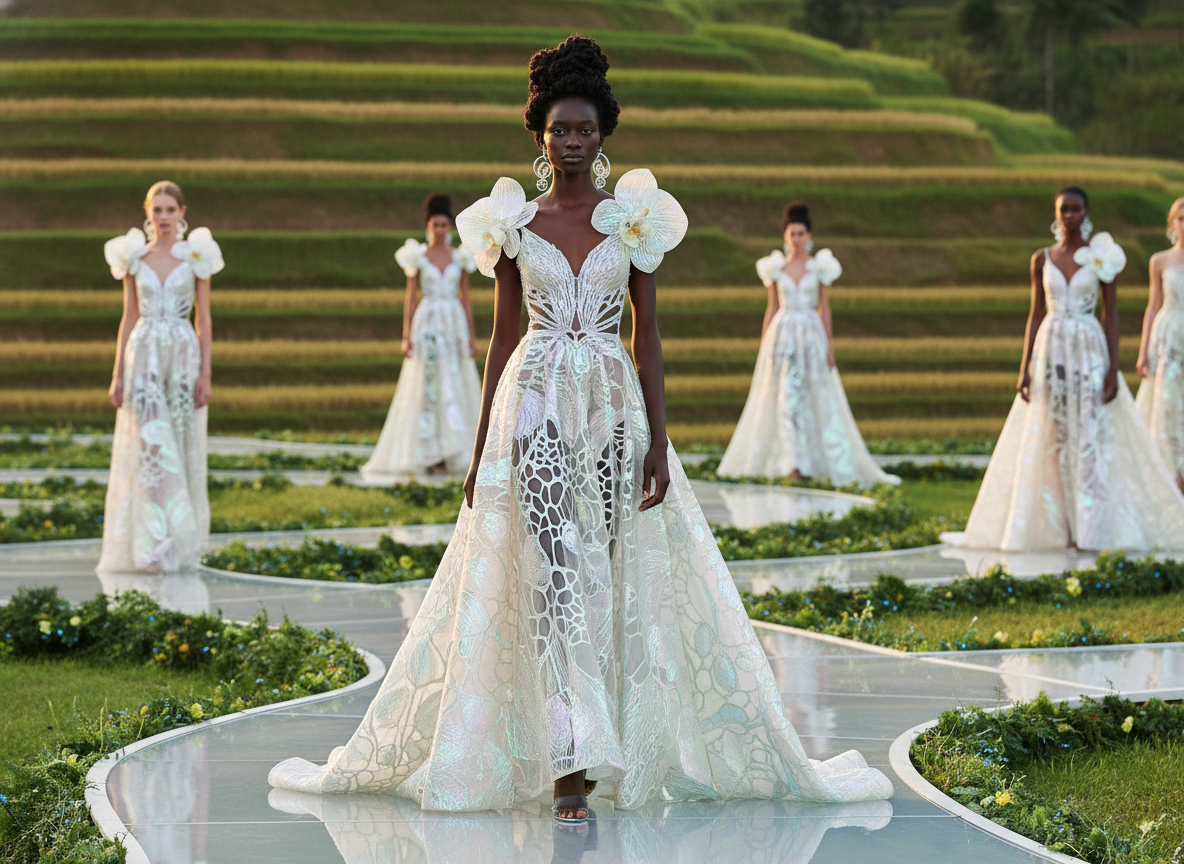
As we move into the second week of April 2026, the fashion industry is witnessing a seismic shift toward bio-aesthetic couture. This movement, characterized by the use of living organisms and lab-synthesized proteins to create high-end garments, has finally moved from experimental labs to the main stages of Paris and Milan. Leading the charge are designers who have swapped traditional polyester for bio-fabricated spider silk, a material that offers ten times the strength of steel while remaining softer than traditional mulberry silk. This week's reveal of the 'Aether' collection has set a new benchmark for what sustainable luxury can achieve.
The core technology driving this trend is precision fermentation, a process where microbes are engineered to produce silk proteins in large bioreactors. Unlike traditional sericulture, which requires vast amounts of water and energy, bio-fabricated silk is carbon-negative and produces zero waste. Fashion houses are now marketing these garments not just as ethical choices, but as superior technical achievements. The structural integrity of these bio-fibers allows for complex, architectural silhouettes that were previously impossible to maintain with natural fabrics, giving designers a new playground for creative expression.
Industry analysts have noted that the consumer demand for 'transparency-first' products has reached an all-time high this April. Every garment in the latest bio-aesthetic lines comes with a digital passport, a blockchain-backed record that details the exact microbial strain used and the energy consumption of the laboratory where it was grown. This level of traceability is the new gold standard for the luxury market, appealing to a generation of shoppers who view sustainability as a non-negotiable prerequisite for high-end consumption.
One of the most striking developments seen this month is the integration of 'living pigments' into these fabrics. Instead of using toxic chemical dyes, researchers have developed algae-based coatings that can change color based on light exposure or the wearer's body temperature. This creates a dynamic, ever-changing aesthetic that mirrors the fluidity of nature itself. During the April 8th showcase in Tokyo, several pieces transitioned from a deep forest green to a vibrant neon turquoise as models walked under different lighting rigs, signaling a future where clothing is no longer static.
While the cost of lab-grown textiles was once a significant barrier to entry, the scaling of production facilities in early 2026 has brought prices down to levels comparable with high-grade organic cotton. This democratization of bio-tech fashion means that mid-tier retailers are also beginning to adopt these materials. We are seeing a shift where 'green' is no longer a niche category but the foundational infrastructure of the entire textile industry. This transition is essential as global regulations on microplastic shedding become increasingly stringent.
The durability of these new materials is another key selling point emphasized by fashion critics this week. Unlike traditional fast-fashion items that degrade after a few washes, bio-fabricated silk is designed for extreme longevity. Its molecular structure resists pilling and fading, ensuring that the garment remains in pristine condition for decades. This aligns with the 'Buy Less, Buy Better' philosophy that has dominated the fashion discourse throughout the first quarter of 2026, encouraging consumers to invest in pieces that are both technologically advanced and timeless.
Critics have lauded the aesthetic versatility of bio-fabrics, noting that they can mimic anything from heavy denim to sheer chiffon without the environmental footprint of those traditional materials. The texture of the new 2026 collections is noticeably different—it feels cooler to the touch and has a weightless quality that enhances the wearer's movement. Designers are leaning into this by creating 'second-skin' garments that focus on ergonomics and comfort as much as visual impact, reflecting a post-utilitarian approach to high fashion.
In conclusion, the rise of bio-aesthetic couture represents a marriage of biology and design that will define the rest of the decade. By April 10, 2026, it is clear that the industry has passed the point of no return regarding synthetic fibers. The future of fashion lies in the petri dish and the bioreactor, where science provides the tools for a more beautiful and sustainable world. As we look forward to the fall collections, the expectation is that bio-materials will not only be a trend but the standard for every major fashion house globally.