The International Civil Aviation Organization (ICAO) has today announced the most comprehensive safety overhaul of the 21st century, targeting the increasing threat of severe clear-air turbulence (CAT). Following a series of harrowing incidents over the last year—most notably the tragic events involving trans-oceanic flights in late 2025 and early 2026—the industry is moving to mandate advanced detection technologies across all commercial aircraft fleets by the end of the 2026 calendar year.
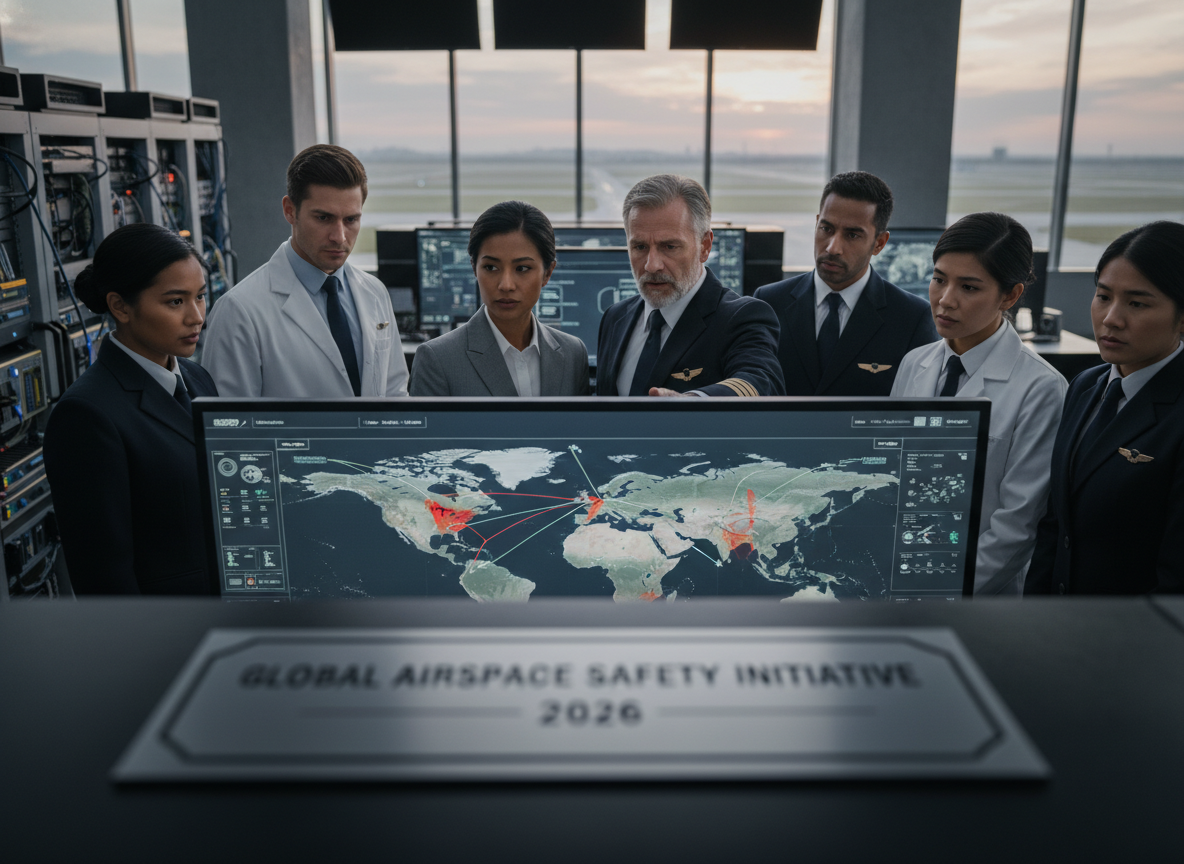
The primary driver of this update is the deployment of 'Quantum-Lidar' sensors, a new class of technology capable of detecting shifts in air density that are invisible to traditional radar. These sensors can provide flight crews with up to 10 minutes of warning before an encounter with clear-air turbulence, allowing for the securement of the cabin and the adjustment of flight paths. This move is seen as a direct response to the impact of climate change on the upper atmosphere, which has made turbulence more frequent and intense.
Industry experts have long warned that the strengthening of the jet stream due to rising global temperatures is creating more 'wind shear' in the cruising altitudes of modern airliners. Data released today by the World Meteorological Organization confirms that severe turbulence incidents have increased by 45% compared to 2020 levels. The new safety mandate aims to reduce injury rates by 90% through a combination of better detection and updated cabin safety protocols.
Beyond hardware, the overhaul includes a mandatory update to pilot training programs. The 2026 'Reactive Stability' course will be integrated into all simulator sessions, teaching pilots how to utilize AI-augmented flight control systems to stabilize aircraft during sudden altitude drops. These systems can react faster than human reflexes, making millisecond adjustments to wing surfaces to dampen the physical effects of CAT.
Airlines have expressed concern regarding the cost of retrofitting older aircraft with the new sensors, which is estimated to cost the industry upwards of $12 billion. However, ICAO officials argue that the cost of inaction—including potential hull losses and massive insurance payouts—far outweighs the initial investment. To assist smaller carriers, a 'Global Flight Safety Fund' has been established, backed by a small surcharge on international tickets.
Passenger comfort and confidence are at the heart of this initiative. A recent survey conducted in April 2026 revealed that 60% of frequent flyers now rank turbulence as their primary fear, surpassing mechanical failure. By introducing these visible safety upgrades, the industry hopes to stabilize the demand for long-haul travel, which has shown signs of softening in corridors frequently affected by atmospheric instability.
The mandate also includes a requirement for all passengers to remain belted whenever seated, a rule that has been phased in by several major carriers over the past few months. New 'Smart-Belts' with sensors will alert cabin crew if a passenger is unbuckled during a period of predicted high-instability. While some see this as an intrusion, the majority of the flying public has welcomed the measure as a necessary evolution of air safety.
As flight paths are adjusted to accommodate the new detection data, travelers may see slight increases in flight times on certain routes. However, aviation authorities maintain that the trade-off for a significantly safer and smoother journey is well worth the extra minutes. The 2026 safety overhaul represents a proactive stance by the aviation community to adapt to a changing planet while maintaining its status as the world's safest form of travel.