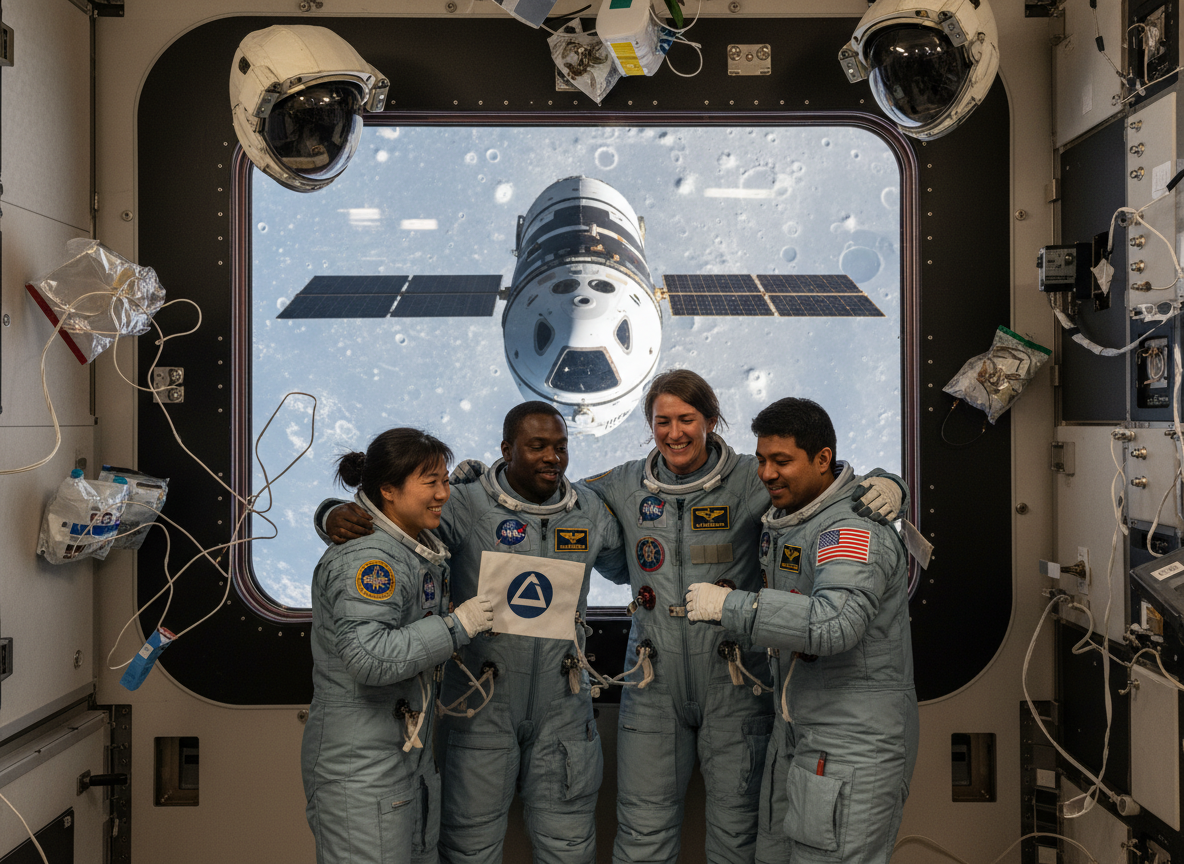
In a monumental achievement for human spaceflight, the Artemis IV mission successfully completed its automated docking sequence with the Lunar Gateway early this morning. The Orion spacecraft, carrying a multi-national crew of four, safely attached to the HALO module, marking the first time humans have boarded the orbiting outpost. This milestone transforms the Gateway from a robotic shell into a functional, inhabited station that will serve as a staging point for all future lunar surface descents.
The mission commander, Reid Wiseman, reported that the pressurized environment within the station is stable and that all life-support systems are operating within expected parameters. This success follows years of meticulous planning and international cooperation between NASA, the ESA, JAXA, and the CSA. The Gateway represents the most complex construction project ever attempted in deep space, situated in a unique near-rectilinear halo orbit that provides constant communication with Earth.
As the crew begins their 30-day residency, their primary focus will be the installation of the I-HAB module, which will provide additional living space and scientific laboratories. These labs are equipped with cutting-edge sensors designed to study the effects of deep-space radiation on human biology, a critical step before any manned mission to Mars. The data collected over the next month will refine shielding technologies for the next decade of exploration.
Furthermore, Artemis IV is the first mission to utilize the upgraded Space Launch System (SLS) Block 1B rocket. This more powerful configuration allowed for the delivery of the Universal Stage Adapter, which carried both the crew and the massive I-HAB component simultaneously. This logistical feat proves that heavy-lift capabilities have reached a level of maturity that can sustain long-term infrastructure development beyond low Earth orbit.
On the lunar surface, the SpaceX Starship HLS (Human Landing System) is currently positioned at the South Pole, awaiting the next phase of the mission. While the Artemis IV crew remains in orbit, robotic scouts are preparing the Shackleton Crater site for the deployment of the first permanent lunar base modules scheduled for 2027. The synergy between orbiting stations and surface operations is the cornerstone of the Artemis program’s sustainability.
Geopolitically, the success of Artemis IV reinforces the Artemis Accords, a set of principles for cooperation in the civil exploration and use of the moon. With more nations joining the coalition, the project has become a symbol of global unity during a time of terrestrial tension. The inclusion of international astronauts in the core crew highlights a shift toward a truly global spacefaring civilization.
Industry experts suggest that the commercial potential of the Lunar Gateway is just beginning to be realized. Private companies are already bidding for 'delivery slots' to send supplies and experiments to the station. This burgeoning lunar economy is expected to drive innovation in robotics, water extraction, and 3D printing using lunar regolith, creating jobs and opportunities back on Earth.
As the sun sets over the Kennedy Space Center today, the mood is one of quiet triumph. The successful docking of Artemis IV isn't just a technical win; it is a psychological threshold crossed. Mankind is no longer just visiting the moon; we are beginning to live there. The Gateway is now the furthest home humanity has ever known, a beacon of light in the vast darkness of the cosmos.