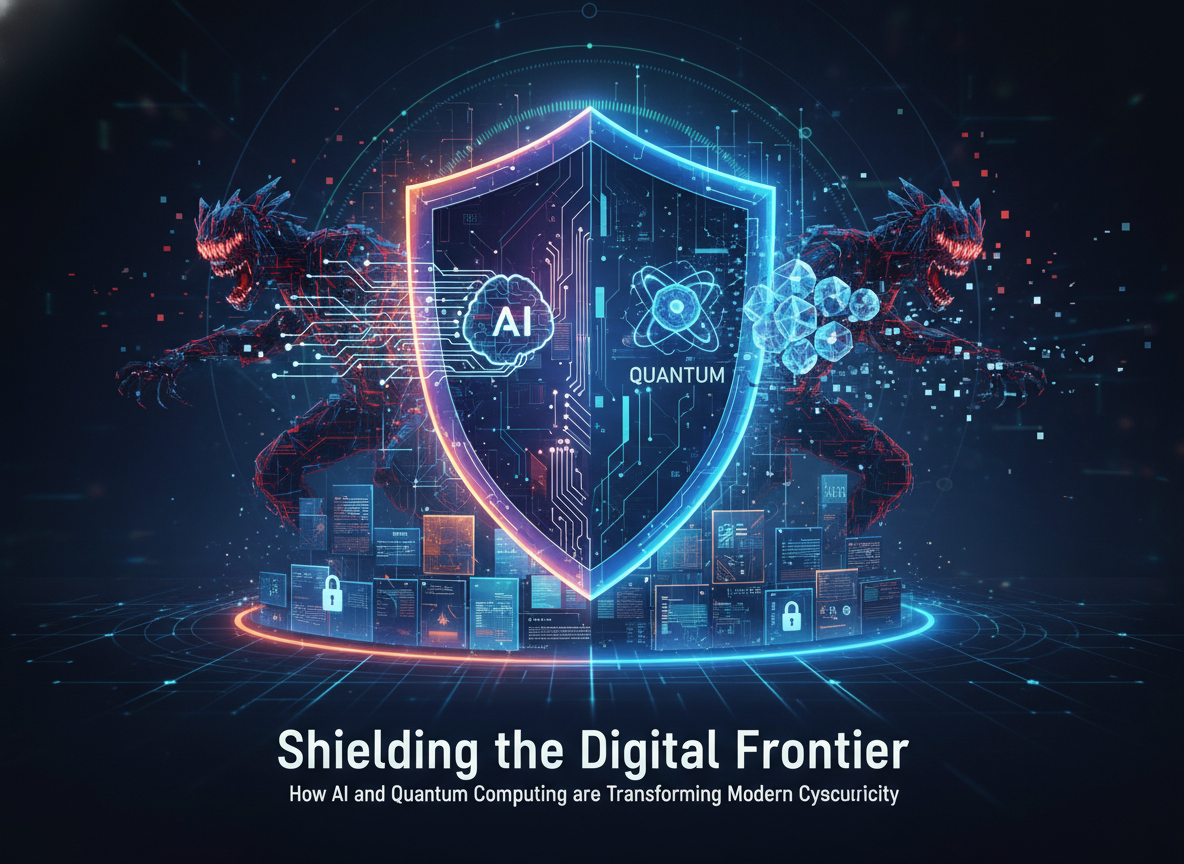
As we navigate an increasingly digital world, the battleground for cybersecurity is shifting toward a high-stakes game of AI versus AI. Hackers are now using generative AI to create highly convincing phishing emails, automate the discovery of software vulnerabilities, and launch sophisticated polymorphic malware that changes its code to evade detection. In response, the cybersecurity industry is deploying its own advanced AI models to predict, detect, and neutralize threats in real-time. This 'AI-driven defense' is no longer a luxury but a necessity for organizations looking to protect their sensitive data from the next generation of cyber-attacks.
One of the most effective applications of AI in cybersecurity is in the realm of 'Threat Hunting.' Traditional security tools rely on a database of known signatures to identify threats, which means they are often one step behind 'zero-day' exploits. AI-driven systems, however, use anomaly detection to monitor network behavior and identify deviations that could indicate a breach. By analyzing billions of data points across an entire enterprise, these systems can spot the subtle signs of a lateral movement or data exfiltration that a human analyst might miss, allowing for an immediate and automated response.
The rise of 'Deepfakes' has added a new layer of complexity to social engineering attacks, where attackers use AI to mimic the voice or face of a trusted executive. To combat this, new identity verification technologies are being developed that use biometric AI to analyze physiological cues that are nearly impossible to replicate. From micro-expressions to unique patterns in speech and typing, these AI-enhanced security layers ensure that the person on the other end of a digital interaction is who they say they are. This is particularly critical in the age of remote work, where digital trust is the foundation of all business operations.
While AI is the immediate challenge, the looming shadow of quantum computing represents a long-term threat to the very foundations of digital security. Current encryption standards, such as RSA and ECC, rely on mathematical problems that would take a classical supercomputer thousands of years to solve but could be cracked by a powerful quantum computer in minutes. This 'Quantum Apocalypse' has prompted a global race to develop Post-Quantum Cryptography (PQC). The goal is to create new encryption methods that are resistant to both classical and quantum attacks, ensuring that our data remains secure long into the future.
NIST (the National Institute of Standards and Technology) has already begun the process of standardizing quantum-resistant algorithms, and forward-thinking organizations are starting to migrate their systems to these new standards. This 'Quantum Readiness' is essential for protecting data that has a long shelf life, such as government secrets and medical records, which could be stolen today and decrypted later once a powerful quantum computer is built—a strategy known as 'Harvest Now, Decrypt Later.' By implementing PQC today, organizations can future-proof their data against the inevitable rise of quantum capabilities.
The 'Zero Trust' architecture has become the gold standard for modern cybersecurity, and AI is its primary enabler. In a Zero Trust environment, no user or device is trusted by default, regardless of whether they are inside or outside the network perimeter. AI constantly evaluates the risk level of every access request based on context, such as the user's location, the health of their device, and the sensitivity of the data they are trying to access. This dynamic approach to security ensures that even if an attacker gains access to one part of the network, they are prevented from moving freely to more sensitive areas.
Automated Incident Response (AIR) is another critical trend, as the speed of modern attacks often outpaces the ability of human teams to react. AI-powered platforms can now automatically isolate infected devices, block malicious IP addresses, and roll back unauthorized changes to a system within seconds of a threat being detected. This reduces the 'dwell time' of an attacker—the period they spend inside a network before being caught—thereby minimizing the potential damage and data loss. For many companies, this automation is the only way to keep up with the sheer volume of attacks they face daily.
In conclusion, the future of cybersecurity is an ongoing arms race defined by rapid technological innovation. While the threats are becoming more formidable, the tools we have to defend ourselves are also reaching new heights of sophistication. By combining AI-driven proactive defense with quantum-resistant encryption and a Zero Trust mindset, organizations can build a resilient digital infrastructure that can withstand the challenges of tomorrow. As technology continues to evolve, our approach to security must be equally dynamic, ensuring that we stay one step ahead of those who wish to exploit our digital lives.