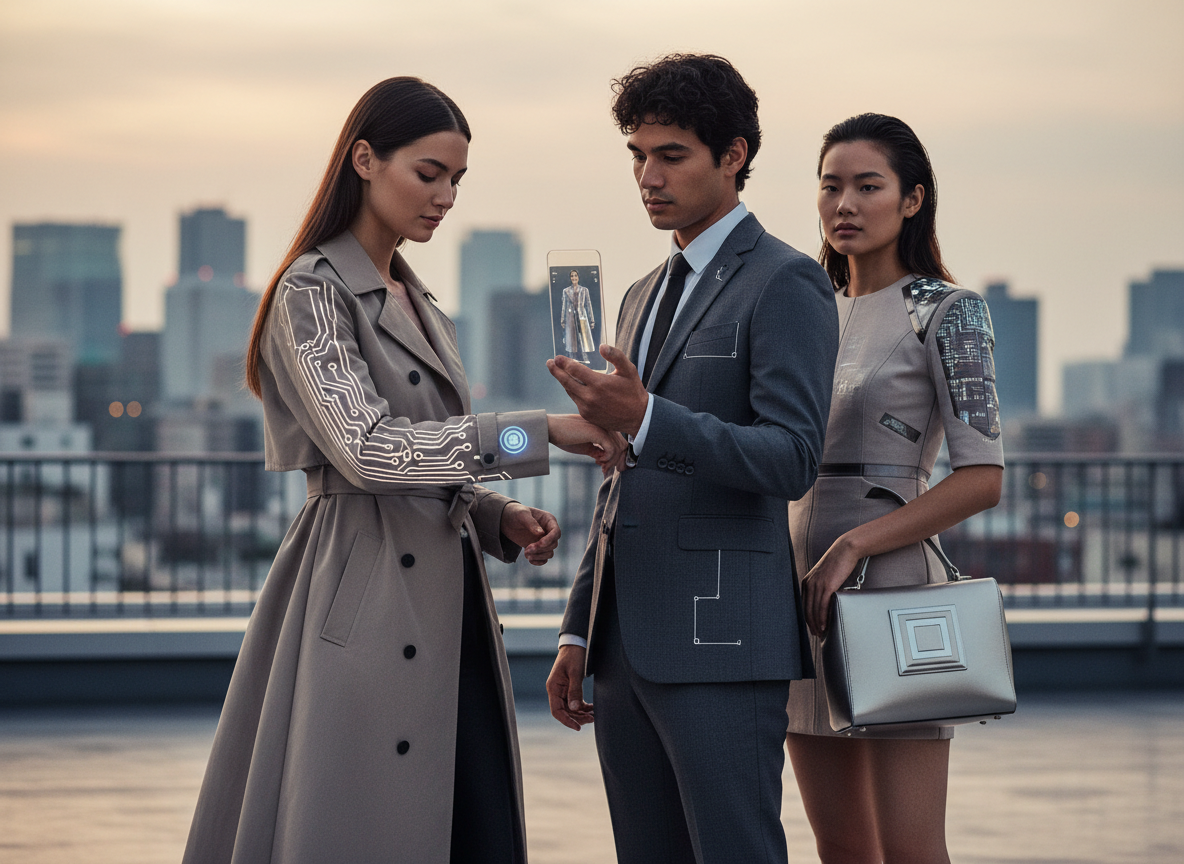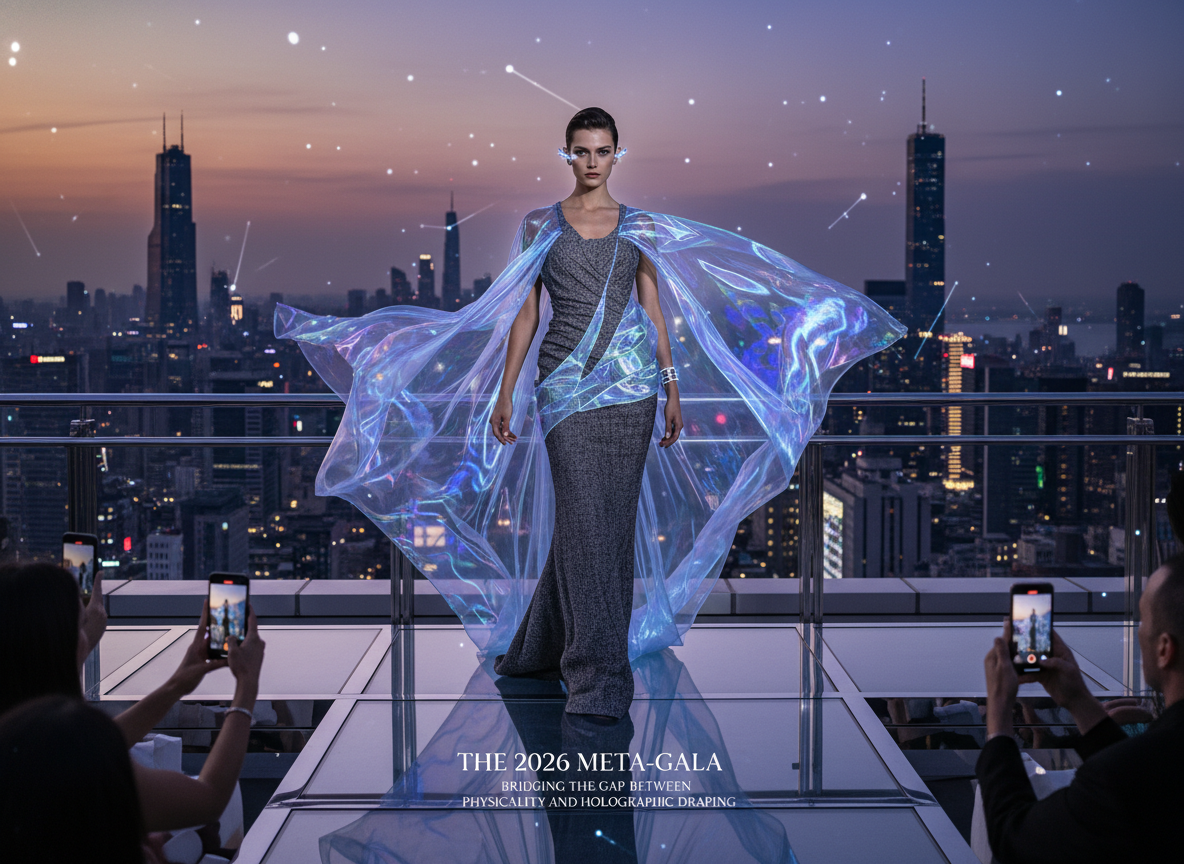
As the fashion world prepares for the 2026 Meta-Gala, today's early-access previews have revealed a trend that is set to redefine the red carpet: Holographic Draping. This technology allows designers to create garments that exist partially in the physical world and partially in the augmented reality (AR) space. While a celebrity may walk the carpet in a simple, sustainably sourced white silk slip, those viewing through AR glasses or 6G-enabled mobile devices see a cascading, iridescent 'aura' of digital fabric that moves with the body, defies gravity, and changes texture based on the music or ambient light.
The concept of 'The Hybrid Garment' is the theme for this year's gala, and it represents a massive leap in how we consume high-fashion imagery. Today, April 10, the first few digital sketches from top houses like Gucci and Iris van Herpen were leaked, showing intricate 'light-woven' wings and floating geometric shapes that are tethered to the physical dress. This allows for a level of creativity that was previously impossible; fabrics can now be made of 'liquid gold,' 'frozen smoke,' or 'pulsing light,' all rendered in real-time with zero latency thanks to the newly established 6G networks in major fashion capitals.
This shift isn't just about the spectacle; it's a response to the sustainability crisis that has plagued the industry. By focusing on digital layers, designers can create 'Infinite Couture' without the need for massive material waste. A single physical 'base' can be updated with hundreds of different AR overlays, allowing the wearer to change their look multiple times during a single event without a wardrobe change. This 'Less-Physical' approach is being hailed as the most significant environmental contribution the fashion industry has made since the 2024 Green Accord.
Accessibility is also at the heart of today's discussions. While the physical Meta-Gala remains an ultra-exclusive event, the digital overlays are being made available to the public via 'Meta-Gala Passes.' Starting today, fashion enthusiasts can download the AR files used by their favorite designers to 'wear' these digital masterpieces in their own virtual spaces or on their social media avatars. This democratizes the experience of high-fashion, allowing the masses to interact with couture that would otherwise be behind velvet ropes and million-dollar price tags.
Technical experts have been working around the clock to ensure the 'anchoring' of these holographic drapes is seamless. Using advanced LIDAR sensors embedded in the physical fabric, the digital layers are pinned to the garment with millimeter precision. This means that as a person moves, dances, or walks against the wind, the digital 'fabric' reacts exactly as it would if it were made of physical fibers. Today's live-streamed test runs showed a level of realism that is indistinguishable from reality, marking the end of the 'uncanny valley' for digital clothing.
The role of the 'Digital Tailor' has also emerged as a new career path in 2026. These specialists work alongside traditional seamstresses to code the physics of the digital overlays. On April 10, several major fashion schools announced that their 'Computational Couture' programs are now their most applied-for courses. The fusion of coding and draping is the new standard for the next generation of designers, who must be as comfortable with Python as they are with a pair of shears. This multidisciplinary approach is rapidly changing the hierarchy of the atelier.
Social media platforms are already buzzing with predictions for the 'Best Dressed' at next month’s gala. The focus has shifted from who is wearing which designer to who has the most 'Complex Overlay.' There is a burgeoning competition among tech-titans and fashion houses to see who can push the limits of 'Visual Physics.' Some rumors suggest we will see garments that interact with the audience's own AR filters, creating a communal, interactive art piece rather than a static walk down a red carpet. This represents the ultimate evolution of fashion as a participatory experience.
As we close out today's fashion report on April 10, 2026, it's clear that the boundary between the digital and the physical has not just been blurred—it has been erased. The Meta-Gala is no longer just a party; it is a laboratory for the future of human expression. Holographic draping is the first step toward a world where our clothes can be anything we imagine, unconstrained by the laws of physics or the limitations of raw materials. The red carpet will never be the same, and neither will our wardrobes.