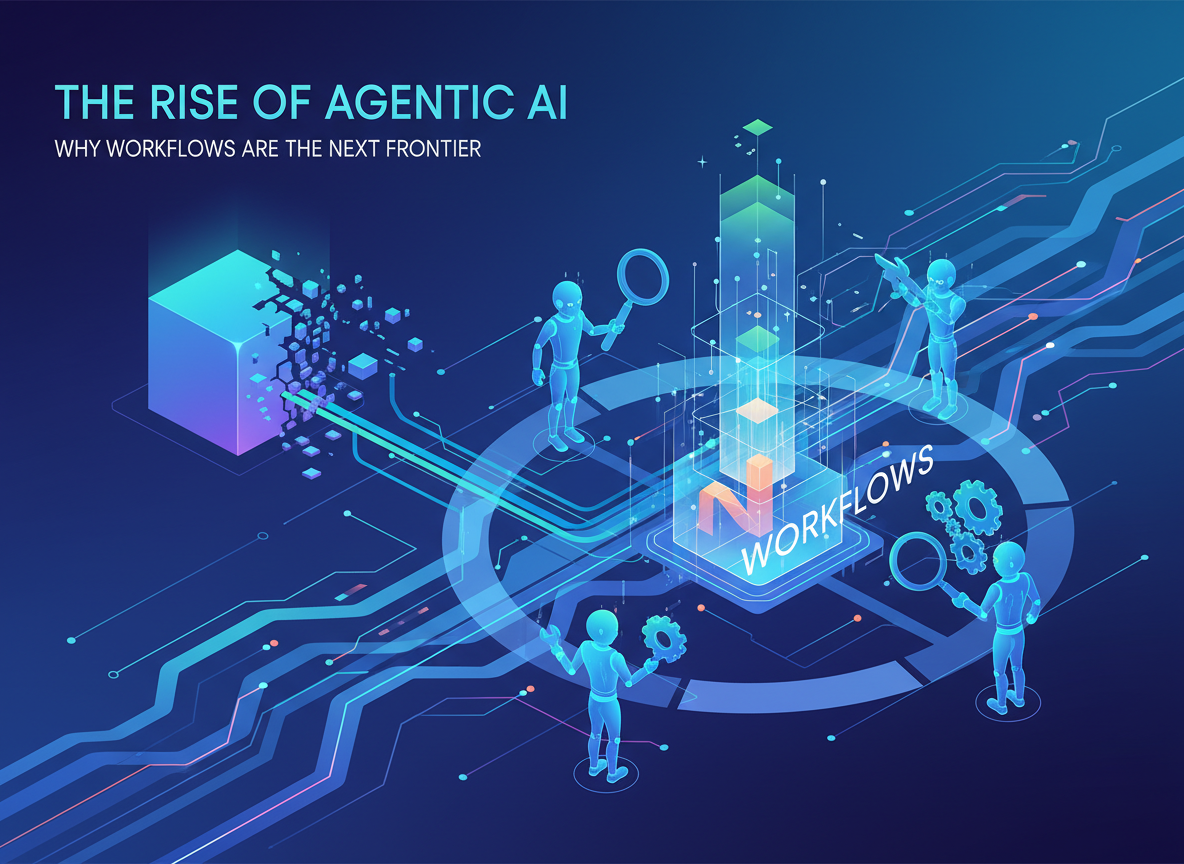
For the past year, the AI conversation has been dominated by the scaling of Large Language Models (LLMs). However, a significant shift is occurring: the move from zero-shot prompting to agentic workflows. Instead of asking a model to generate a final result in one go, developers are building systems where the AI iterates, critiques its own work, and uses tools to solve complex tasks.
This paradigm shift is often compared to the difference between a student taking a timed test without a scratchpad and an employee working through a multi-day project. In an agentic workflow, an AI might draft a piece of code, run it, observe the errors, and then fix the code—all without human intervention. Early benchmarks suggest that an older, smaller model used in an agentic loop can often outperform a much larger model using a simple prompt.
Key players like OpenAI, Anthropic, and Microsoft are increasingly focusing on these autonomous capabilities. Frameworks like LangGraph, AutoGen, and CrewAI are enabling developers to orchestrate multiple specialized agents, each handling a specific part of a larger workflow, such as research, writing, or quality assurance.
The implications for the workforce are profound. We are moving toward a future where AI acts less like a search engine and more like a digital colleague. As these workflows become more sophisticated, the focus will shift from the size of the model to the efficiency of the design pattern, marking a new era of practical AI implementation.