


Quick Summary
- ISRO's Aditya L1 mission launched in September 2023.
- Key findings include new insights into solar flares.
- Mission enhances understanding of solar wind effects.
- Data is crucial for predicting space weather events.
- Future missions may build on Aditya L1's discoveries.
The ISRO Aditya L1 Solar Mission has unveiled groundbreaking findings since its launch in September 2023. This mission aims to study the Sun's outer layers and their influence on space weather, offering vital insights into solar dynamics.
As the first Indian mission dedicated to solar observation, the Aditya L1 mission's discoveries are pivotal for researchers worldwide, especially as we confront increasing solar activity in the coming years.
Overview of the ISRO Aditya L1 Solar Mission
The Aditya L1 mission, launched by the Indian Space Research Organisation (ISRO), is India's first dedicated solar observatory. It aims to study the Sun's atmosphere and its various layers, including the photosphere, chromosphere, and corona. Positioned at the Lagrange point L1, approximately 1.5 million kilometers from Earth, Aditya L1 enables continuous observation of solar phenomena without interruption from Earth's atmosphere.
This strategic placement allows for real-time monitoring of solar activities, such as solar flares and coronal mass ejections, which can significantly impact space weather and terrestrial communications. The mission's primary objectives include studying solar radiation, understanding the dynamics of solar winds, and analyzing the Sun's magnetic field.
For more context on ISRO's mission history, see our article on ISRO Gaganyaan Mission and its implications for India's space ambitions.
Key Discoveries from the Aditya L1 Mission
Since its deployment, the Aditya L1 mission has provided invaluable data on solar phenomena. One of the key findings includes a deeper understanding of solar flares, which are sudden eruptions of radiation from the Sun's surface. These flares can disrupt satellite operations and communications on Earth.
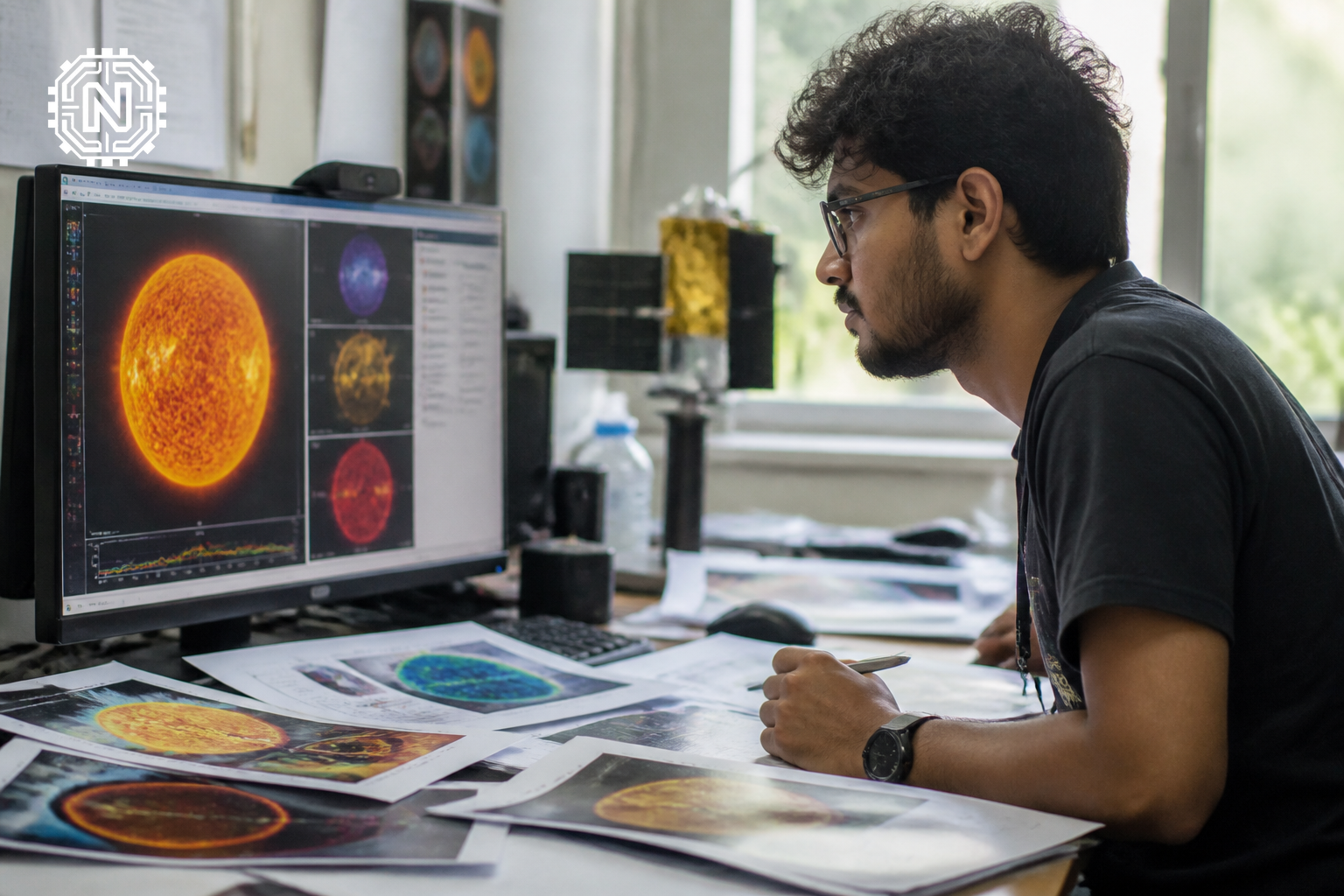
Additionally, the mission has revealed new insights into the solar corona's temperature and structure. Researchers have observed that the corona is significantly hotter than the Sun's surface, a phenomenon that has puzzled scientists for decades. This data is crucial for improving models of solar behavior and predicting solar weather events.
For a comprehensive look at other ISRO missions, refer to our coverage of the Chandrayaan 4 Mission, which aims for lunar exploration.
Implications of Solar Research on Space Weather
The findings from the Aditya L1 mission have significant implications for understanding space weather. Solar activity can have profound effects on Earth's magnetosphere, leading to phenomena such as geomagnetic storms. These storms can disrupt power grids, satellite communications, and navigation systems.
By enhancing our understanding of solar flares and coronal mass ejections, the mission aids in developing better predictive models for space weather. This is crucial as society becomes increasingly reliant on technology that could be affected by solar events.
For more on the importance of space weather, see our article on the ISRO Space Mission Preparations.
Official Statements and Reactions to the Findings
ISRO officials have expressed pride in the mission's achievements. The Director of the Aditya L1 project stated, 'The data we are receiving is beyond our expectations and will pave the way for future solar research.' This sentiment reflects the broader scientific community's excitement regarding the potential applications of the mission's findings.
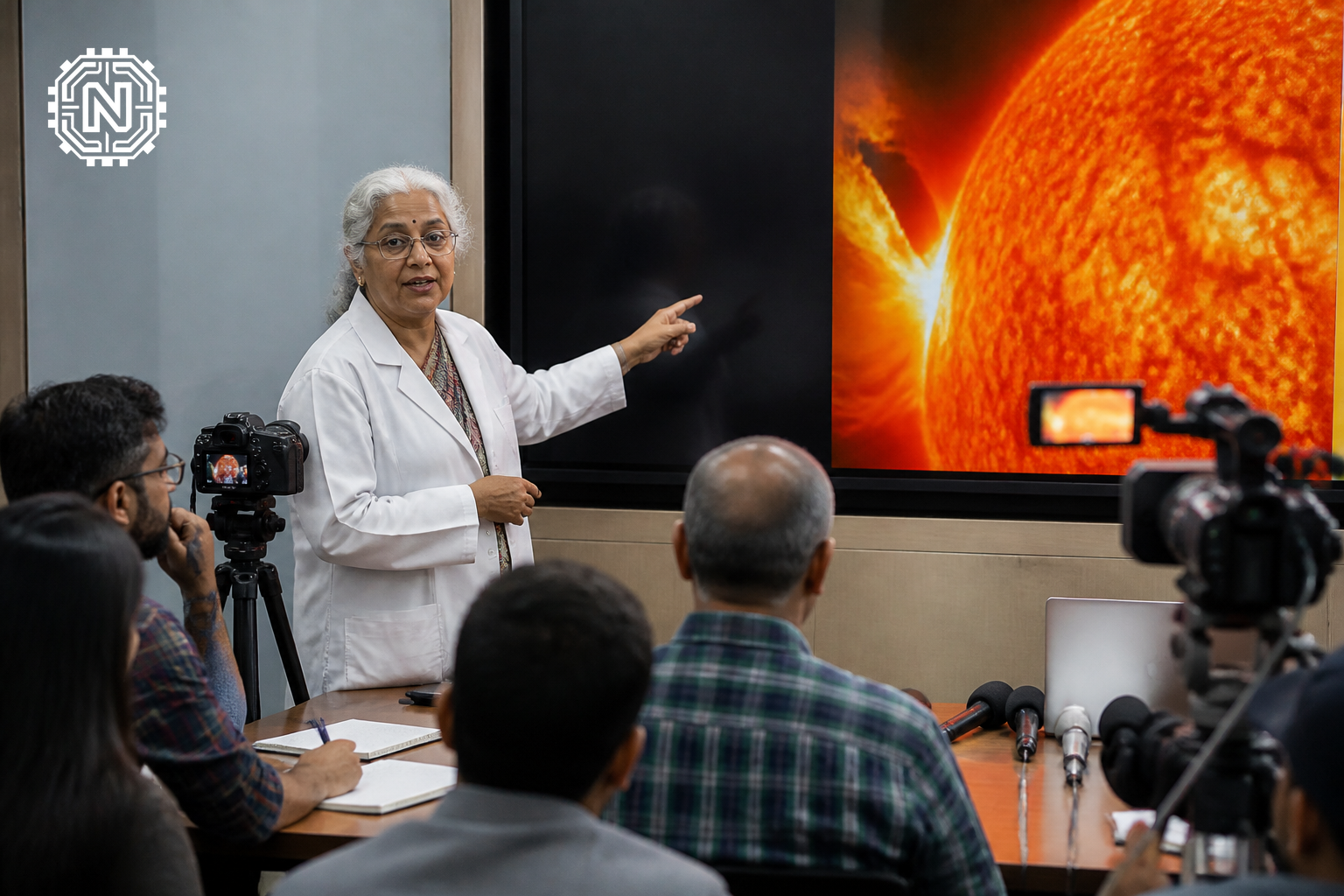
International collaborations are already forming, with scientists from various countries eager to analyze the data collected by Aditya L1. This collaborative effort highlights the global significance of solar research and the mission's role in advancing our understanding of the Sun.
Future Outlook: What’s Next for ISRO and Solar Research?
The success of the Aditya L1 mission sets the stage for future solar missions, both for ISRO and internationally. Plans for additional observational missions are underway, focusing on areas such as solar magnetism and the solar cycle's effects on space weather.
As research continues, the data from Aditya L1 will not only enrich our understanding of solar activity but also inform the design of future spacecraft and instruments aimed at exploring the Sun and beyond.
Conclusion
The ISRO Aditya L1 Solar Mission has significantly advanced our understanding of solar dynamics and their effects on space weather. Its discoveries will influence future research and technology development in the field of solar science.
Frequently Asked Questions
What is the ISRO Aditya L1 Solar Mission?
The ISRO Aditya L1 Solar Mission aims to study the Sun, focusing on its outer layers and understanding solar activities and their effects on space weather.
When was the ISRO Aditya L1 Solar Mission launched?
The ISRO Aditya L1 Solar Mission was launched on September 2, 2023.
What are the main objectives of the ISRO Aditya L1 Solar Mission?
The mission's primary objectives include studying solar radiation, solar wind, and the Sun's magnetic field to enhance our understanding of solar dynamics.
What instruments are onboard the ISRO Aditya L1 Solar Mission?
The mission carries seven scientific payloads, including a visible emission line coronagraph and a solar ultraviolet imaging telescope.
How will the ISRO Aditya L1 Solar Mission benefit us?
This mission will improve our understanding of solar activities, which can help predict space weather events that affect satellite operations and communication.
What discoveries have been made by the ISRO Aditya L1 Solar Mission so far?
As of mid-2026, the mission has provided valuable data on solar flares and coronal mass ejections, enhancing our knowledge of solar phenomena.
How long is the ISRO Aditya L1 Solar Mission expected to last?
The mission is designed to operate for at least five years, providing continuous data on solar activity.
Where is the ISRO Aditya L1 Solar Mission positioned?
The spacecraft is positioned at the L1 point, approximately 1.5 million kilometers from Earth, allowing it to continuously observe the Sun. For more on News, explore Newtechzy. You can also review our Privacy Policy and Cookie Policy, or learn more About us.
Related Topics
Stay updated on the latest in space exploration. Explore more about ISRO's missions or contact us for detailed insights.
Start Your Journey Today!


