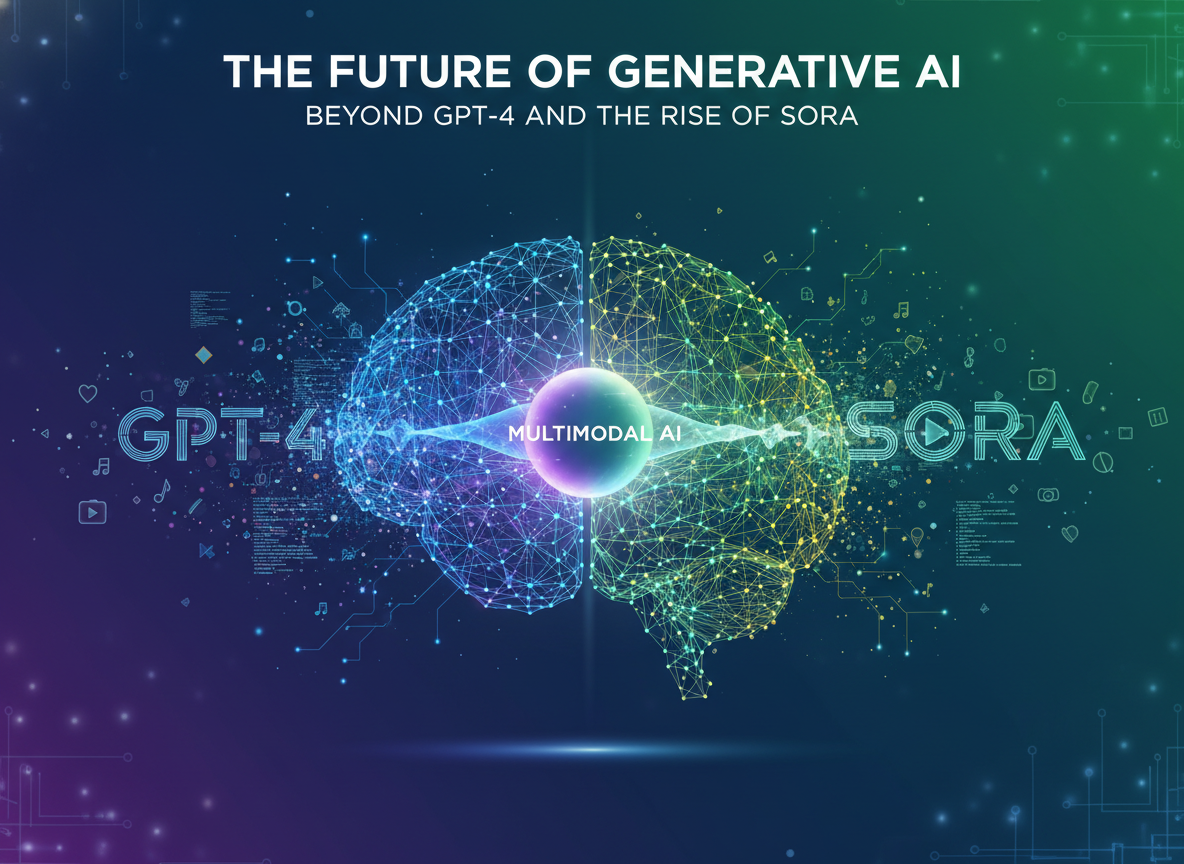
The landscape of generative artificial intelligence is shifting rapidly, moving from simple text-based interactions to complex multimodal experiences that redefine how we interact with machines and digital content. These advancements are not merely incremental; they represent a fundamental change in the capability of large language models to perceive and interpret the physical world through diverse data streams including video and audio.
OpenAI's recent unveiling of Sora has sent shockwaves through the creative industries, demonstrating that AI can now generate highly realistic video content from simple text prompts with unprecedented temporal consistency. This breakthrough suggests a future where professional-grade video production is democratized, allowing creators to manifest complex visual narratives without the overhead of traditional film equipment.
Anticipation for the next iteration of Large Language Models, specifically GPT-5, is reaching a fever pitch as rumors suggest a massive leap in reasoning capabilities and context window size. Industry experts expect this next generation to move beyond pattern matching and toward true cognitive synthesis, enabling more reliable decision-making in autonomous applications.
This evolution is not just about complexity but about efficiency and the ability of models to understand the physical world through visual data and spatial awareness. By training on vast datasets of video, models like Sora learn the laws of physics and object permanence, which are critical steps toward achieving Artificial General Intelligence (AGI).
Enterprise adoption of these tools is accelerating, with companies integrating generative agents into their daily workflows to automate everything from proprietary code generation to personalized customer service at scale. Businesses that fail to integrate these high-performance AI tools risk falling behind in an increasingly automated global economy where speed and precision are paramount.
However, the hardware demands for training and running these massive models are pushing the limits of current semiconductor technology, leading to a global GPU shortage and intense competition for silicon. This has sparked a secondary innovation race in specialized AI chips designed specifically to handle the high-throughput requirements of transformer-based architectures.
Ethical considerations remain at the forefront of the tech conversation, as the potential for deepfakes and misinformation increases with the hyper-realism of AI-generated media. Developers and regulators are now tasked with creating robust digital watermarking and verification systems to ensure that synthetic content can be easily identified by the public.
Looking ahead, the focus is shifting toward Agentic AI, where models do not just respond to queries but proactively complete multi-step tasks autonomously. This transition will likely see AI systems acting as executive assistants that can manage complex projects, navigate software interfaces, and interact with other AI agents to achieve high-level goals.